
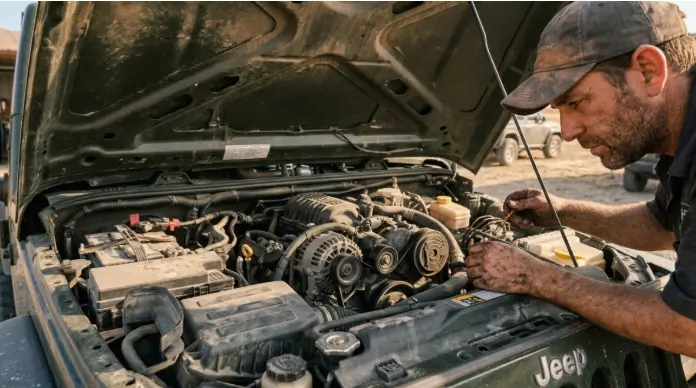
Desert driving can be exciting, but soft sand and high heat can put a lot of stress on your Jeep. A quick check before the trip can help prevent breakdowns and keep everyone safe.
Before driving into the desert, check the tyres, engine fluids, cooling system, battery, air filter, and 4×4 system.
You should also inspect the recovery points and carry the right recovery tools. If you notice a fault during your check, getting a Jeep service in Mussafah can help you fix the problem before heading into the sand.
Essential Jeep Checks Before Desert Driving
1. Check the Tyres and Air Pressure
Your tyres are one of the most important parts of a Jeep when driving on sand. Start by checking each tyre for cuts, cracks, bulges, or other damage. Do not forget to inspect the spare tyre because a damaged spare will not help much in an emergency.
When you reach the sand, lower the tyre pressure to around 14 to 18 PSI, depending on your Jeep, tyres, and driving conditions. Lower pressure gives the tyres a wider contact area and can help the Jeep move over soft sand instead of digging in.
Check the Spare Tyre Too
Make sure the spare is properly inflated before leaving. Also check that the jack, wheel tools, and locking wheel nut key are easy to find. After leaving the desert, inflate the tyres back to normal road pressure before driving on paved roads.
2. Inspect the Cooling System
Desert heat can make the engine work much harder, especially when climbing dunes at low speed. Check the coolant level when the engine is completely cold and make sure it sits between the marked levels.
Look at the radiator for sand, dirt, leaves, or insects that may block airflow. A blocked radiator can make it harder for the engine to stay cool.
Check for signs of coolant leaks around the hoses, radiator, and reservoir. If the coolant level keeps dropping, have the cause checked before taking the Jeep into the desert.
3. Check Engine, Transmission and Other Fluids
Fluids help protect important parts of your Jeep during long and demanding drives. Check the engine oil and make sure it is at the correct level. You should also inspect the transmission fluid if your Jeep allows a normal level check, along with brake fluid and power steering fluid where applicable.
Look underneath the vehicle for fresh oil or fluid marks. Pay close attention to the transfer case and differentials because leaks in these areas can become serious during off-road driving. If a fluid looks dirty, smells burnt, or is below the required level, get it inspected before the trip.
4. Inspect the Air Filter
Fine desert sand and dust can quickly collect inside the air filter. A dirty filter can restrict the amount of air reaching the engine and may affect engine performance. Open the air filter housing and check the filter for heavy dust or dirt.
If it is badly blocked, replace it before driving in the desert. It is also useful to check the airbox for loose sand and clean it carefully.
Do not ignore this simple check because the engine needs clean air while working hard on dunes. A clean filter helps the engine breathe properly during demanding drives.
5. Test the Battery and Electrical Parts
A strong battery is important when you are far from paved roads or repair shops. Check the battery terminals for dirt or white corrosion and make sure the connections are tight. Look for any signs of damage around the battery case.
You should also test the headlights, brake lights, indicators, hazard lights, and horn before leaving. These parts are useful for both safety and communication with other drivers.
Rough desert tracks can cause vibration, so loose electrical connections may become a problem. If the battery is old or the Jeep has shown starting problems, have it tested before your trip.
6. Test the 4×4 System
Do not wait until you are stuck in sand to find out that the four-wheel-drive system has a problem. Test the 4H and 4L modes on firm ground before entering the dunes, following your Jeep’s owner’s manual.
Check that the system engages correctly and that there are no warning lights or unusual sounds. The transfer case and differentials should also be checked for leaks or damage.
If your Jeep has different drive modes or traction settings, make sure you understand how they work. Knowing the controls before reaching the sand makes off-road driving safer and less stressful.
7. Check Recovery Points and Suspension Parts
A Jeep can become stuck even when the driver has good experience. Before leaving, inspect the front and rear recovery points and make sure they are firmly attached. Do not use a decorative bumper part or an unsuitable tow point for recovery.
Also look underneath the Jeep for loose parts, damaged suspension components, or leaking shocks. Check the steering and suspension for unusual movement or noise.
The rough surface of desert tracks creates strong vibration, so weak or damaged parts can become worse. A professional Jeep maintenance service in Mussafah can inspect these areas if you are unsure about their condition.
8. Pack Essential Desert Recovery Gear
Good recovery equipment can make a big difference if your Jeep gets stuck. Sand can hold a vehicle firmly, so carrying basic tools gives you more options before calling for outside help.
A shovel can clear sand from around the tyres, while traction boards can provide a firm surface under the wheels. A rated recovery strap and suitable shackles can help with a safe recovery when used correctly.
Carry a tyre pressure gauge and a portable air compressor so you can adjust the tyre pressure when entering and leaving the sand.
Essential Equipment for Desert Driving
| Equipment | Why You Need It |
| Portable 12V air compressor | Reinflates tyres before returning to paved roads |
| Tyre deflator and pressure gauge | Helps lower and measure tyre pressure |
| Recovery strap or kinetic rope | Helps recover a stuck vehicle |
| Rated soft shackles | Connects the recovery strap to proper recovery points |
| Heavy-duty shovel | Clears sand from around tyres and the chassis |
| Traction boards | Give tyres extra grip in soft sand |
| Safety flag and pole | Helps make your Jeep visible near dunes |
| Drinking water | Provides essential hydration during emergencies |
9. Carry Water and Basic Safety Supplies
Mechanical preparation is important, but you also need to prepare for the people inside the Jeep. Desert temperatures can become dangerous, especially if the vehicle stops moving. Carry enough drinking water for every passenger and keep it somewhere easy to reach.
A basic first-aid kit, charged phone, power bank, flashlight, and emergency supplies are also useful. Let someone know where you are going and avoid travelling into remote areas alone.
If you are new to desert driving, going with an experienced group is a safer choice. Good preparation can reduce the risk of a small problem becoming an emergency.
Final Thoughts
A desert trip should start with a vehicle that is ready for heat, sand, and rough ground. Check the tyres and pressure, cooling system, engine fluids, air filter, battery, 4×4 system, recovery points, and suspension before leaving.
Pack a compressor, gauge, shovel, recovery strap, shackles, traction boards, and enough water for everyone. If you find a warning sign or mechanical problem, do not ignore it just because the Jeep still drives normally.
A proper Jeep repair service in Mussafah can help identify problems before they leave you stuck in the desert. A few careful checks can make your trip safer and more enjoyable.