
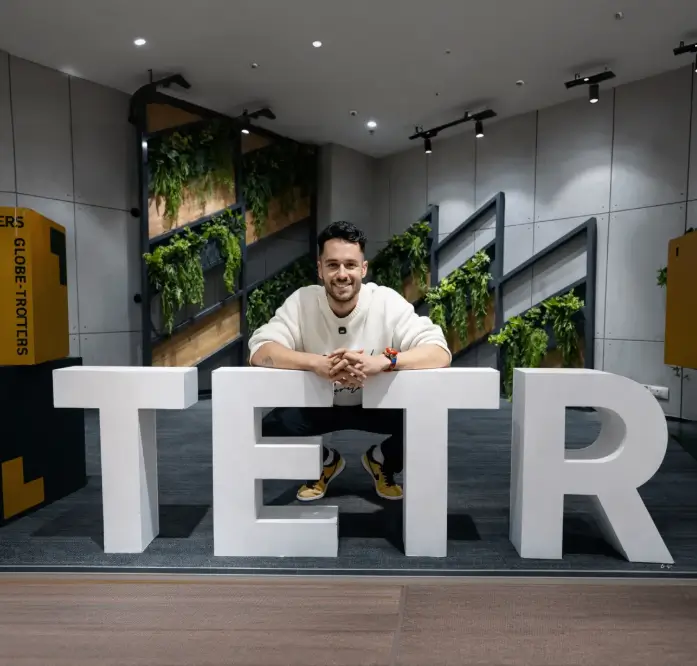
For decades, higher education followed a strict blueprint. You picked a city, moved into a dorm, and spent four years inside the exact same square mile of campus schools. That static model is fading.
As modern companies cross borders and teams go fully remote, a handful of forward-thinking institutions are completely rethinking what schools and education should look like. Instead of treating international exposure as a brief, optional exchange semester, they are embedding global education directly into the core curriculum. Business schools like Tetr are replacing traditional learning with international mobility, real-world venture building, and multi-market learning.
This isn’t just about students traveling more. It forces us to ask a bigger question: shouldn’t the environment where you learn business be just as global as the markets you’ll eventually work in?
What Is a Global Campus Business School?
A global campus business school like Tetr throws out the traditional idea of a single-location home base. Students rotate through different economic powerhouses, interacting directly with local entrepreneurs and tech hubs. The city itself becomes the classroom instead of serving as a pretty backdrop. This changes how you study international business. You aren’t just reading a textbook chapter about supply chains in Asia or tech ecosystems in the Middle East; you are interacting and building your own ventures in these markets. For anyone eyeing a cross-border career, that shift from theory to reality changes everything.
Why Is Global Education Becoming More Relevant?
The modern workplace is interconnected to a fault. Teams collaborate across different time zones, and businesses pitch to consumers with completely different cultural identities. While textbook frameworks still matter, modern graduates need to know how to apply them when the entire context changes.
That is exactly why global education has moved to the center of the higher education debate. Immersing yourself in different countries exposes you to entirely fresh approaches to leadership, technology, finance, and consumer behavior. It forces you to question your assumptions and adapt on the fly.
One of the massive, overlooked payoffs of this style of schools and education is raw cultural intelligence. You quickly realize that a leadership style that works perfectly in one culture might alienate a team in another. Consumer behavior is deeply tied to regional norms that outsiders easily miss.
Experiencing these subtle shifts repeatedly turns students into incredibly sharp observers. For future founders and executives, that perspective is a massive competitive advantage. Whether you are leading a multicultural team or launching a brand in a new territory, understanding the unwritten local rules is what prevents costly failures.
The Campus Becomes Part of the Curriculum
In a conventional university, the campus is just where you sit. In a global campus model, the setting actively drives what you learn.
Imagine trying to launch a startup prototype in three different countries over three semesters. The customer pain points change. The regulations shift. Even the way local investors react to your pitch will be night and day. Suddenly, students have to answer real, high-stakes business questions: What does a local customer actually care about here? How does this specific market operate? Which assumptions from my last stop fail completely here? How do I pivot the strategy right now?
These are the exact practical questions that traditional business school models rarely test you on.
Real-World Business Exposure Matters
Let’s be honest: just catching flights doesn’t make you a better business leader. Traveling without purpose is just tourism. The global education model only works when international exposure hooks directly into actual, practical learning. Students need to engage with local founders, build live projects, and test actual ideas in the local market.
Tetr College of Business leans heavily into this disruptive strategy. Their education model takes students through multiple countries, blending academic credits with intense venture-building and corporate exposure. The goal isn’t a checklist of visited countries; it’s using every single destination as a live business laboratory.