


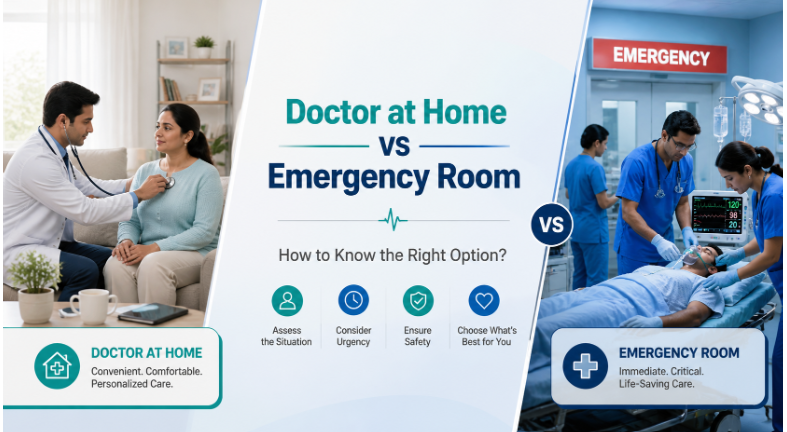
When someone in your family suddenly feels unwell, the first question is usually simple but stressful: should you call a doctor to the house or go straight to the emergency room?
Choosing the wrong option can waste time, increase stress, and sometimes delay urgent care. The good news is that many common health concerns can be safely checked at home, while clear warning signs should always be treated as emergencies.
A Doctor at Home service is useful when the condition is uncomfortable, worrying, or needs medical attention, but does not appear life-threatening. An emergency room is for serious symptoms, sudden changes, major injuries, or situations where hospital-level equipment may be needed.
This guide will help you understand the difference in a simple, practical way.
What Is a Doctor at Home Service?
A Doctor at Home service allows a licensed medical professional to visit you at your home, hotel, or workplace. Instead of travelling to a clinic, waiting in a queue, or exposing yourself to other infections, you can receive medical assessment where you are.
This can be helpful for:
- Fever, flu, cough, sore throat, or mild infections
- Stomach pain, vomiting, or diarrhea without severe warning signs
- Minor allergies or skin rashes
- Mild body pain, headache, or fatigue
- Elderly patients who find travel difficult
- Children who are uncomfortable but stable
- Follow-up checks after a recent illness
- Basic prescriptions, medical advice, or referrals
A Doctor on Call service is also helpful when you are unsure whether symptoms need urgent care. In many cases, the doctor can assess the patient, guide the next step, and advise if hospital care is needed.
What Is the Emergency Room For?
The emergency room is designed for serious, sudden, or life-threatening conditions. ER teams have access to advanced testing, imaging, emergency medicines, oxygen support, and urgent procedures.
You should go to the ER or call emergency services if there is chest pain, breathing difficulty, stroke-like symptoms, uncontrolled bleeding, loss of consciousness, severe injury, seizures, or sudden severe pain. Mayo Clinic and NHS guidance both list symptoms such as chest pain, trouble breathing, stroke signs, severe bleeding, and loss of consciousness as reasons to seek emergency care.
In simple words, if the patient looks seriously unwell, is getting worse quickly, or may need hospital machines or emergency treatment, do not wait for a home visit.
Doctor at Home: When It Is the Right Option
A Doctor at Home is often the right choice when the patient is stable but needs medical attention. For example, a child with fever and cough may not need the ER if they are breathing normally, drinking fluids, and staying alert. A home doctor can check temperature, throat, lungs, hydration, and advise treatment.
It is also a good option when symptoms are disturbing daily life but are not severe enough for emergency care.
Common examples
You can consider a home visit for:
- Fever that is not linked with breathing difficulty, confusion, or fits
- Mild to moderate flu symptoms
- Ear pain or throat pain
- Mild food poisoning symptoms
- Back pain or body aches
- Mild allergic reaction without swelling of lips, tongue, or breathing issues
- Blood pressure check when the patient is stable
- Medication review for elderly patients
- Mild wound care or infection check
For busy families, tourists, elderly patients, and working professionals, this option can save time and reduce unnecessary hospital visits.
When a Doctor on Call Can Help First
A Doctor on Call can be useful when you are unsure about the next step. Sometimes the symptoms are not clearly mild or severe. For example, a patient may have fever and weakness, but no chest pain, no breathing problem, and no confusion.
In this case, speaking to a doctor first can help you decide whether to book a home visit, visit a clinic, or go to the ER.
A Doctor on Call may ask about:
- Age of the patient
- Current symptoms
- Duration of illness
- Temperature, oxygen level, or blood pressure if available
- Existing conditions like diabetes, heart disease, asthma, or pregnancy
- Current medicines
- Any sudden changes in behavior, breathing, or pain
This quick medical screening can reduce panic and help you make a safer decision.
When You Should Go to the Emergency Room
Some symptoms should never be managed only at home. If any of the following signs are present, choose emergency care immediately.
Go to the ER for these warning signs
- Chest pain, chest pressure, or pain spreading to the arm, jaw, neck, or back
- Severe shortness of breath
- Sudden weakness on one side of the body
- Slurred speech or face drooping
- Fainting or loss of consciousness
- Severe allergic reaction with swelling or breathing difficulty
- Severe bleeding that does not stop
- Seizures
- Severe head injury
- Sudden severe headache
- Severe abdominal pain
- Blue lips or severe breathing distress
- Confusion, extreme drowsiness, or sudden behavior change
- Major burns, fractures, or road accident injuries
Cleveland Clinic Abu Dhabi also lists breathing difficulty, chest pain, vision changes, difficulty speaking, fainting, confusion, and sudden severe pain among reasons to visit the emergency department.
If you are unsure but the symptoms look serious, treat it as an emergency.
Doctor at Home vs ER: Simple Decision Guide
Here is an easy way to decide.
Choose a Doctor at Home if:
- The patient is awake, alert, and breathing normally
- Symptoms are uncomfortable but not severe
- There is no major injury or heavy bleeding
- Pain is mild to moderate
- The patient can drink fluids
- The condition is not getting worse very quickly
- You need a medical check, prescription, or follow-up advice
Choose the ER if:
- The patient has chest pain or breathing trouble
- There are stroke-like symptoms
- There is severe pain or sudden collapse
- Bleeding is heavy or uncontrolled
- The patient is confused, unconscious, or having seizures
- There has been a serious accident
- The patient may need scans, oxygen, IV fluids, or urgent hospital care
A good rule is this: if waiting for a doctor could put the patient at risk, go to the ER.
Real-World Examples
Example 1: Fever in a child
A 6-year-old has fever, sore throat, and low appetite. The child is awake, drinking water, and breathing normally. In this case, a home doctor can assess the child and advise treatment.
But if the child is struggling to breathe, very sleepy, has fits, or has blue lips, this is an emergency.
Example 2: Chest discomfort in an adult
A 45-year-old feels chest tightness with sweating and shortness of breath. This is not a situation for a home visit. The patient should go to the ER immediately or call emergency services.
Example 3: Elderly patient with weakness
An elderly parent feels weak after mild diarrhea but is alert and able to drink fluids. A home doctor may check hydration, blood pressure, and medicines.
But if there is confusion, fainting, severe dehydration, or blood in vomit or stool, emergency care is safer.
Practical Tips Before You Decide
Before booking a home visit or going to the ER, quickly check:
- Is the patient breathing normally?
- Is the patient alert and responding?
- Is there chest pain, severe pain, or heavy bleeding?
- Did symptoms start suddenly?
- Is the patient getting worse quickly?
- Does the patient have heart disease, diabetes, asthma, pregnancy, or advanced age?
For a home visit, keep this information ready:
- Current symptoms and when they started
- Temperature, blood pressure, oxygen level if available
- List of medicines
- Known allergies
- Medical history
- Recent travel or contact with sick people
This helps the doctor make a faster and safer assessment.
Why Choosing the Right Option Matters
Going to the ER for mild symptoms can mean long waiting times, higher costs, and added stress. It can also expose patients to other infections.
On the other hand, choosing home care for a true emergency can delay life-saving treatment.
That is why the decision should be based on symptom severity, not convenience alone. A Doctor on Call or home visit is best for stable, non-emergency conditions. The ER is best for serious symptoms that need urgent hospital care.
Final Thoughts
A Doctor at Home service can be a safe and convenient choice for many common illnesses, especially when the patient is stable and needs timely medical care without travelling. It is ideal for families, elderly patients, children, visitors, and busy professionals.
However, the emergency room is always the right choice when symptoms are severe, sudden, or life-threatening. Chest pain, breathing difficulty, stroke signs, severe bleeding, fainting, seizures, or major injuries should never wait.
When in doubt, speak to a Doctor on Call for guidance. But if the situation feels urgent or the patient looks seriously unwell, choose emergency care immediately.
FAQs
1. When should I book a Doctor at Home?
You can book a Doctor at Home when the patient has non-emergency symptoms such as fever, flu, cough, sore throat, mild stomach issues, body pain, or needs a medical check-up at home.
2. Can a Doctor at Home replace the emergency room?
No. A home doctor is suitable for stable conditions. The ER is necessary for serious symptoms such as chest pain, breathing difficulty, stroke signs, severe bleeding, seizures, or major injuries.
3. Is Doctor on Call useful before booking a home visit?
Yes. A Doctor on Call can help you understand whether your symptoms are suitable for a home visit, clinic visit, or emergency care.
4. Should I call a home doctor for chest pain?
No. Chest pain, especially with sweating, shortness of breath, dizziness, nausea, or pain spreading to the arm or jaw, should be treated as an emergency.
5. Can children be treated through a home doctor visit?
Yes, many common childhood issues such as fever, cough, sore throat, mild stomach upset, or rash can be checked at home if the child is stable. Severe breathing issues, fits, extreme sleepiness, or dehydration need urgent care.
6. What should I prepare before the doctor arrives?
Keep the patient’s symptoms, temperature, medicines, allergies, medical history, and recent test reports ready. This helps the doctor assess the condition more accurately.


