


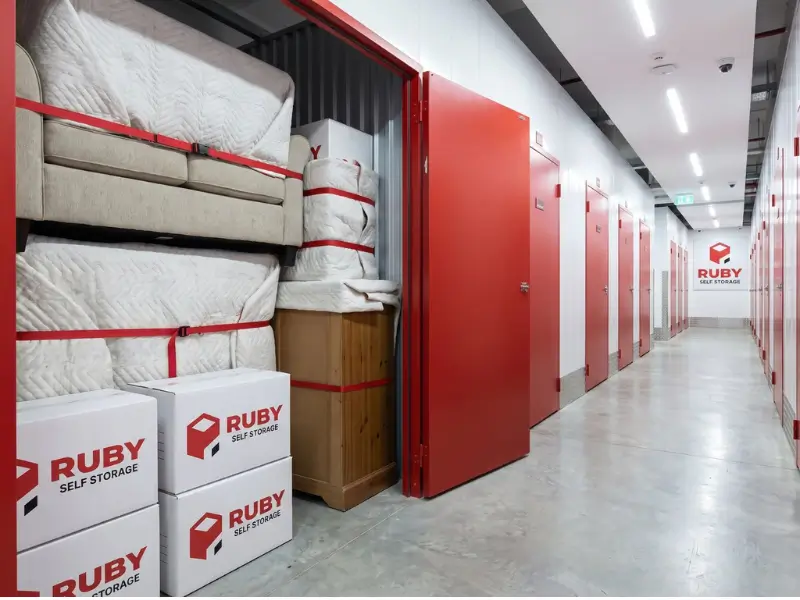
Dubai is one of the most mobile cities in the world. Market research into the UAE property sector revealed that many people in Dubai move at least once every two to three years, either within the city or abroad. All those moves create storage requirements, and many residents’ challenges are not only finding space but also ensuring it will preserve what they place in it. Household goods and Furniture storage in Dubai is a matter of genuine financial risk, and this guide provides all the practical and thorough information that residents need to handle it appropriately.
The Reality of Dubai’s Storage Environment
Under the Köppen climate classification system, Dubai’s climate is classified as hot desert, or BWh, with very low annual rainfall and one of the highest average temperatures of any inhabited city on earth. Summer temperatures in Dubai routinely exceed forty-five degrees Celsius, and the urban heat island effect means temperatures inside buildings without active cooling climb even higher. The UAE’s National Centre of Meteorology confirms that July and August are consistently the hottest months, with daily highs averaging above forty-one degrees.
For storage in Dubai, this means that any unit without active, continuous climate control effectively becomes an oven for several months of the year. Wood expands, contracts, and warps under these conditions. The Forest Stewardship Council and furniture industry standards confirm that solid wood furniture requires stable humidity between forty and sixty percent relative humidity and temperatures between fifteen and twenty-five degrees Celsius for long-term preservation. Uncontrolled storage conditions in Dubai exceed these ranges for extended periods. This is not a theoretical risk. It is a documented fact of the climate that any Dubai resident placing furniture into storage must account for.
What Furniture Storage Dubai Actually Requires
The implications of Dubai’s climate for furniture storage Dubai are direct and specific. Every piece of solid wood furniture, every upholstered item, every leather piece, and every composite furniture item stored in Dubai requires a climate-controlled environment to have a reasonable expectation of being retrieved in the same condition it was left.
Temperature regulation alone is not sufficient. Humidity management is equally important, because it is humidity fluctuation that causes wood to expand and contract, and it is low humidity that causes leather to dry out and crack. A storage unit that cools the air without managing its moisture content can actually create conditions more damaging to wood than an uncooled unit, because air conditioning removes humidity from the air and lower humidity accelerates the drying and cracking of wood and leather surfaces. A genuinely suitable furniture storage facility in Dubai actively manages both temperature and relative humidity within the ranges appropriate for the materials being stored.
How to Choose the Right Storage in Dubai for Your Furniture
The selection process for furniture storage in Dubai should follow a structured approach that prioritises the factors most likely to determine whether your belongings are protected. The following framework covers what matters in the order in which it matters.
Verify Climate Control with Specific Questions
Ask every facility you consider the following questions directly. What temperature range do your units maintain year-round? What relative humidity range do you target? Does your system operate continuously throughout the year or only during summer months? How is the system monitored, and what is the response procedure when conditions fall outside the target range? A facility that answers all four questions with specific figures and operational confidence has the infrastructure to back its claims. One that responds with general assurances should be assessed with significant caution.
Assess Unit Size Accurately
The British Association of Removers recommends using a professional inventory assessment before booking any storage unit. Walk through every room contributing items to storage and note each piece of furniture with its approximate dimensions. Determine whether each piece will be stored assembled or disassembled, as this directly affects the volume required. Without this information, arriving at the facility almost always results in either oversizing, which costs more than necessary, or undersizing, which causes stacking and compression that leads to physical damage.
Common Unit Sizes
25 sq ft suits a few boxes and small items. 50 sq ft handles a studio apartment’s contents. 100 sq ft covers a one-bedroom apartment. 150 to 200 sq ft is required for two- or three-bedroom apartment furniture. Always add a ten percent buffer to your estimate.
Disassembly Savings
Disassembling bed frames, removing sofa legs, and taking wardrobe doors off their hinges can reduce the effective volume of a furniture set by twenty to thirty percent, directly reducing the unit size and monthly cost of the storage arrangement.
Confirm Security Standards
The Self Storage Association of Australasia, whose standards are widely referenced across Middle East storage markets, recommends that customers verify four minimum security provisions before committing to any storage facility: continuous CCTV coverage of all areas, individual unit access control, on-site staff presence during operating hours, and documented incident response procedures. These four provisions represent the baseline standard that any storage facility in Dubai worth considering should be able to confirm clearly.
Understand the Contract Before Signing
The UAE consumer protection laws, stipulated by Federal Law No. 15 of 2020 on Consumer Protection, provide minimum protection in relation to service contracts; however, the terms and conditions of such contracts differ widely among the storage providers. Make sure you find out the minimum term and the monthly fee before signing the contract, the notice period they will need before you can end or change your contract, whether there are any early termination fees, the exact conditions for returning deposits, and if there are any automatic renewals in the contract. A good storage services company will have no qualms about writing down all of the above.
How to Pack and Prepare Furniture for Dubai Storage
The condition in which furniture is retrieved is directly influenced by how it is prepared and packed before storage, even in a well-managed climate-controlled facility. The preparation steps adhere to the international furniture storage standards and are tailored specifically for the storage conditions in Dubai.
- Ensure that the furniture is thoroughly dried and cleaned before storing it. Even in a controlled environment, moisture that gets trapped in fabric, wood grain, or under the cushions can set conditions for the growth of mould and mildew.
- When storing wooden surfaces, apply a good furniture polish or wood conditioner. This will block the movement of moisture and slow the drying process of wood during storage.
- Store leather surfaces with a leather conditioner. Dry leather will crack faster than properly treated leather, regardless of how well the leather is stored in a humidity-controlled area.
- Use cotton dust covers for upholstered furniture, not plastic. Seals moisture to fabric and provides an exact microenvironment of humidity that enables mildew growth.
- Use moving blankets or furniture pads to wrap wood surfaces to prevent scratching and damage to edges while moving furniture and transporting it into the unit.
- Keep mattresses off the floor and against the wall when possible, as leaving them flat for long periods produces permanent loss of resilience of the mattress structure.
What Does Storage in Dubai Cost and Is It Worth It?
Storage costs in Dubai can be different depending on the unit size, climate control requirements, location, and duration of the contract. According to industry data, the price of climate-controlled units is generally from fifteen to thirty percent more than the non-climate-controlled units offered at the same facility in the UAE storage market. While that premium is always worth it for furniture, the cost of replacing furniture that has warped, cracked, and suffered from mildew and would after a summer in Dubai far outweighs the premium over the years that have been paid for the climate control.
There are more elements to consider than just the monthly storage fee. For valuable furniture, any type of Dubai storage company will offer insurance coverage for the stored goods, or the home contents insurance policy will cover it. The Insurance Authority of the UAE recommends that stored items be insured at replacement value and not their current market value, because it is normally possible to find a better quality piece with a replacement value much higher than the sale value in Dubai for the same item that is in good condition.
Conclusion
Choosing the right and wrong ways to store furniture in Dubai makes a difference in the outcome, especially after a few weeks, and more significantly, after a few months or years. While there are risks in these environments, they are real, specific, and well documented and entirely preventable with appropriate facility selection and preparation. The five actions that result in a storage experience in Dubai that delivers what storage should deliver: belongings that come back in the same condition that they were left in: Verifying climate control with specific questions, sizing the unit accurately, confirming security standards, understanding the contract thoroughly, and preparing furniture properly before it goes in.
You Also like:
Al Sajaa Sharjah: Why Businesses and Investors Are Choosing This Area
International Business Tower Dubai | Location, Offices, Rental Prices & Complete Business Bay Guide