
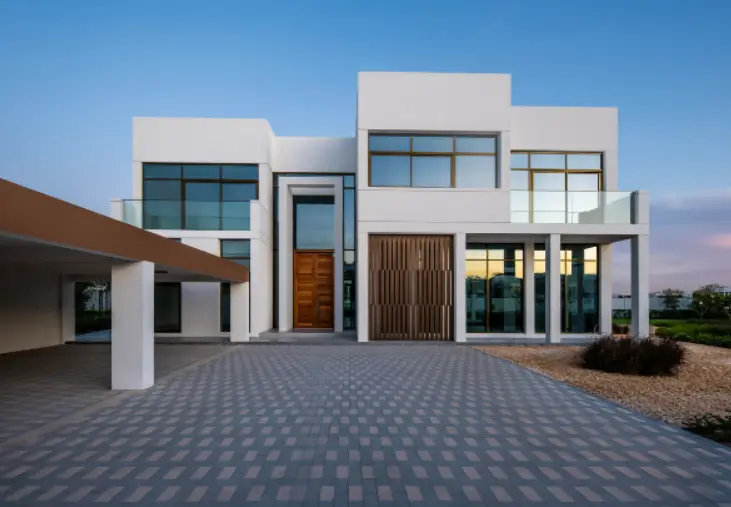
Abu Dhabi’s waterfront market has spent the last two years pulling ahead of the rest of the emirate. That hasn’t slowed down in 2026. Analysts expect luxury and waterfront homes to grow in value faster than homes further inland this year, and rents in popular waterfront neighbourhoods are already running as much as 30% higher than similar inland areas. For anyone shopping in this part of the market, that is exactly why the number on the listing page deserves a closer look, not less attention.
Villa buyers often focus mainly on the price per square foot and stop there. But the sale price is just the start of a longer financial commitment. The real gap is between what a waterfront villa costs to buy and what it costs to actually own, and that is where many first-time island buyers get caught off guard. Here is what that gap is really made of.
Registration Costs That Show Up Before You Move In
The first real cost most buyers underestimate isn’t a lifestyle expense at all. It’s paperwork. Once a Sale and Purchase Agreement is signed, the developer must register the transaction with the Initial Real Estate Register through Abu Dhabi’s DARI system within 21 days. Miss that window and the penalty is AED 10,000. On top of that, registration carries a 2% fee. This fee is not automatically the buyer’s job by default. The Sale and Purchase Agreement itself sets out who pays it, so that clause is worth reading closely rather than assuming.
Later, once the project is complete and the unit moves from the Initial Register to the full Real Estate Register, approval from Abu Dhabi’s Department of Municipalities and Transport leads to a certificate of sale. The downloadable Title Deed follows from there. None of this shows up in a listing’s headline price, but all of it is due before or shortly after handover.
The Ongoing Bill Waterfront Living Actually Carries
Service charges are where waterfront properties are really different from a standard inland villa. Industry estimates put annual service charges for beachfront villas and low-rise waterfront communities in Abu Dhabi at AED 20 to 35 per square foot. This covers pool and marina upkeep, waterside security, and shared beachfront or canal-front maintenance. That is clearly higher than a typical gated villa community away from the coast. Buyers who only budget for the mortgage or the cash payment, without planning for a yearly charge at that level, often feel it most in year two, once the excitement of handover has worn off.
There is also a maintenance side to being near the water. Salt air wears down exterior finishes, metalwork, and outdoor fixtures faster than it would inland. Private jetty or berth access, where it exists, usually comes with its own maintenance cost. None of this is a reason to avoid waterfront property. It is simply part of the true cost of the lifestyle, and worth asking about directly before you buy, rather than finding out after handover.
What Buyers Are Actually Buying
Abu Dhabi’s property market is also unusual because so many buyers pay in cash. This protects a large share of buyers from changes in mortgage rates that affect decisions elsewhere. But financing is not the only thing that makes this market different. For many buyers, the purchase itself does two jobs at once. Any property bought at AED 2 million or above qualifies for the UAE’s Golden Visa, turning a villa purchase into a long-term path to residency as much as a real estate deal. That benefit does not show up in standard rental return numbers, and it is increasingly part of why waterfront buyers in this price range are willing to accept the higher ongoing costs described above.
Where Island-Style Developments Fit the Picture
The financial requirements for coastal living in the capital are not uniform across all developments. High-density residential towers on Al Maryah or Reem Island distribute maintenance expenses across a larger pool of owners, whereas low-density, exclusive island enclaves follow a different pricing logic due to their unique amenity structures. A prime illustration of this lower-density approach is Jubail Island, an expansive private retreat featuring waterfront villas in Abu Dhabi nestled among natural mangroves. In these settings, the value proposition shifts away from shared vertical infrastructure toward the premium placed on seclusion, ecological integration, and the sustained capital appreciation of land in high-demand, limited-supply island locations.
The Real Number to Budget Against
The honest answer to what buyers are really paying for is that the purchase price is just the entry fee. Registration deadlines and fees, a yearly service charge well above inland areas, extra upkeep near the coast, and for many buyers a chance at long-term residency on top of the property itself, all add up to the real cost of owning on Abu Dhabi’s waterfront in 2026. Buyers who plan for that full picture before signing tend to end up far happier with their decision than those who stopped reading at the listing price.