


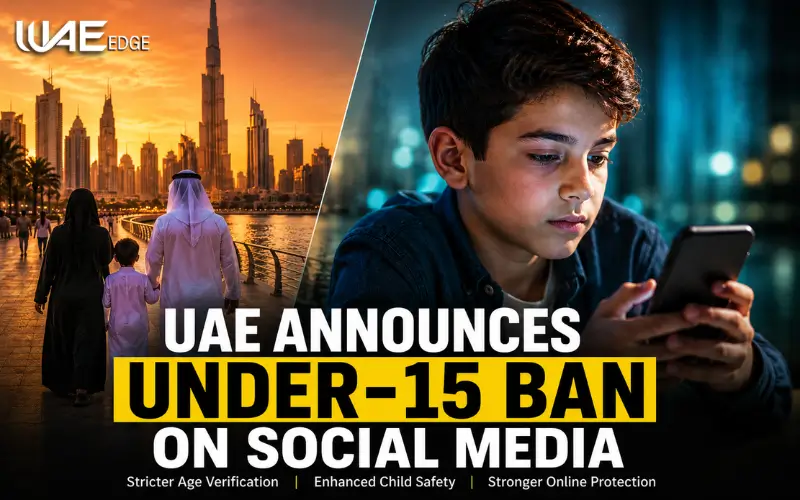
Children under 15 will not be able to use social media platforms in UAE, according to the announcement from Authorities. In the new resolution, social media companies in the country will be required to take active steps profiling minors, confirming age with trustworthy technologies and shutting down accounts which are not compliant. This would be a major change from the existing self-declared age system, with the authorities no longer now feeling confident that this is a good method of protecting children online.
Stricter Age Verification Required
In the new model, social media platforms are not allowed to use the date of birth that users provide at the time of registration as the sole basis for determining their age. Rather, business will need to use such sophisticated age verification systems that they are able to reliably identify the age of the user. These approaches can involve technology and tools with Artificial Intelligence, biometric checks, and other permitting methods that are approved by the Child Digital Safety Council. These verification systems are expected to be regularly reviewed to ensure effective and transparent systems.
What Happens to Accounts Created by Children Under 15?
Consistently tracking for child under 15 accounts on social media sites is a continuous endeavor. Platforms will be obliged to take quick action if such accounts are identified, such as:
- Suspending the account
- Switching off features as needed Turning Power Platform features off when required
- Under pressure after repeated usage until verified compliance to limit continued use
Whether the child has generated the account by themselves or with parent consent applies to the rules.
Regulated Access for Teenagers Aged 15 and 16
Children under 15 will be completely banned, but there will be tightened restrictions for those aged 15 to 16, allowing them to still have access to social media, as long as they take extra steps for their security. All of these accounts will be subject to tighter safeguards that limit online dangers and enhance online wellbeing. Parents will be able to access accounts that enable them to make some changes to their accounts and to see some activity within it. They’ll not be able to ignore or eliminate necessary safety safe bars set by the platforms.
Child Privacy Takes Priority
Ensuring protection for children’s personal information is a major concern of the resolution. The age verification systems need to meet strong privacy standards such as:
- Only collecting needed information
- Gathering all the information during the running process.
- Removes information after verification.
- Keeping numbers of children to minimum necessary retention periods
Limiting also children’s information to being not collected for purposes of tracking their behaviour, personalizing advertising or commercial profiling.
Parental Consent Will Not Override the Ban
One of the more significant is that the restriction will not apply to children younger than 15 unless they have the parent’s permission. The parent rights and responsibilities will not be affected if a parent allows their child to use a social media site, as will the age limitations and enforcement on the usage of the account. Parents/caregivers continue to have the responsibility to supervise and model digital safety behaviors.
Authorities to Monitor Compliance
The new regulations will be monitored by the National Media Authority and Telecommunications and Digital Government Regulatory Authority. These entities will be empowered to engage in investigations and take steps to rectify platforms that do not adhere to the rules. Possible enforcement actions are warnings, administrative fines and, in severe cases, partial or complete site restrictions.
The Child Digital Safety Council will also be continuing to research and review new threats to children’s safety when online and make recommendations for improvements to the national digital safety framework.
A New Era for Child Online Safety
The United Arab Emirates’ decision aligns with the latest trend of the increased presence of child protection regulations globally. The move will lead to a more secure online environment and will also place an additional responsibility on social media platforms for child safety, as the regulations include effective age verification and limitations on underage access as well as privacy protections.


