


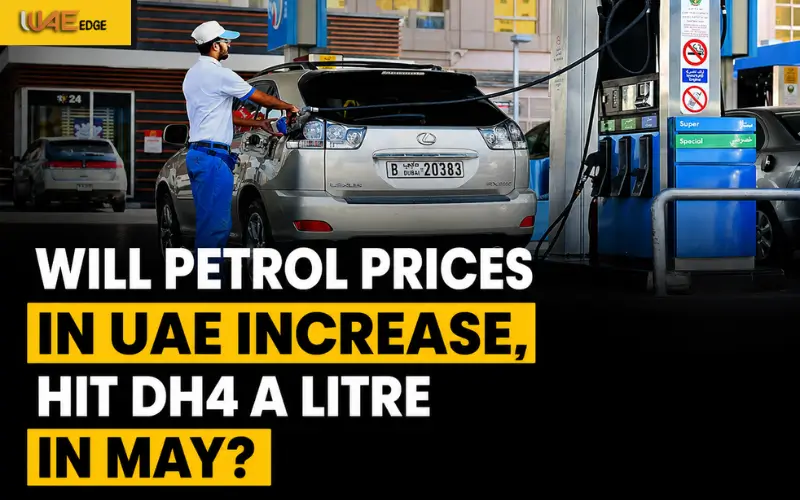
UAE is anticipated to revise the petrol prices in the next week, before May, to account for the continual shifts in the global oil markets. There are indications on the market regarding the possibility of an upward shift although the final decision will be made by the UAE Fuel Price Committee on April 30.
The price of crude oil was high in all of April and was mostly in the high 90s and at times high 100s per barrel. This influx has been precipitated by geopolitical feuds in the Middle East such as military activities between the United States, Israel, and Iran and the discontinuation of important supply lines.
Although prices had been temporarily suppressed due to a period of ceasefire between the US and Iran, the oil markets recovered above the $100 mark due to a resurgence of geopolitical rhetoric, which continued pushing fuel prices higher.
UAE fuel prices have shot up sharply by some Dh0.80 per litre, about one-third, in April, as crude prices shot up in March with the intensification of the regional conflict on February 28. Retail is at Dh3.39 per litre on Super 98, Dh3.28 on Special 95 and Dh3.20 on E-Plus.
Statistics show that in April, an average price of Brent crude was at an average of 99.16 per barrel, a rise of 96.96 in March. This is an indication of the possibility of a slight rise in petrol prices up to May, which still has to be confirmed.
The UAE has been reported to have the highest levels of petrol prices in 2022 with the global energy shock brought about by the Russian-Ukrainian conflict; the country registered more than Dh4 per litre in its fuel prices, the first time since that figure was documented. Super 98 reached Dh4.63 per litre in July 2022 whereas Special 95 hit Dh4.52.
The disruption of the Strait of Hormuz, a key oil transit route in the world is further affecting current market conditions. The presumptive 10 to 13 million barrels per day of global supply–in effect since late February one out of every 12 -13 supply has been cut off by the effective closure of the strait, being one of the most serious energy shocks since the oil crises of the 1970s.
Although the trend of oil prices indicates a further strain on fuel prices, the level of any rise in May will finally rely on how the committee will observe the market situation at the expiry of April.


