
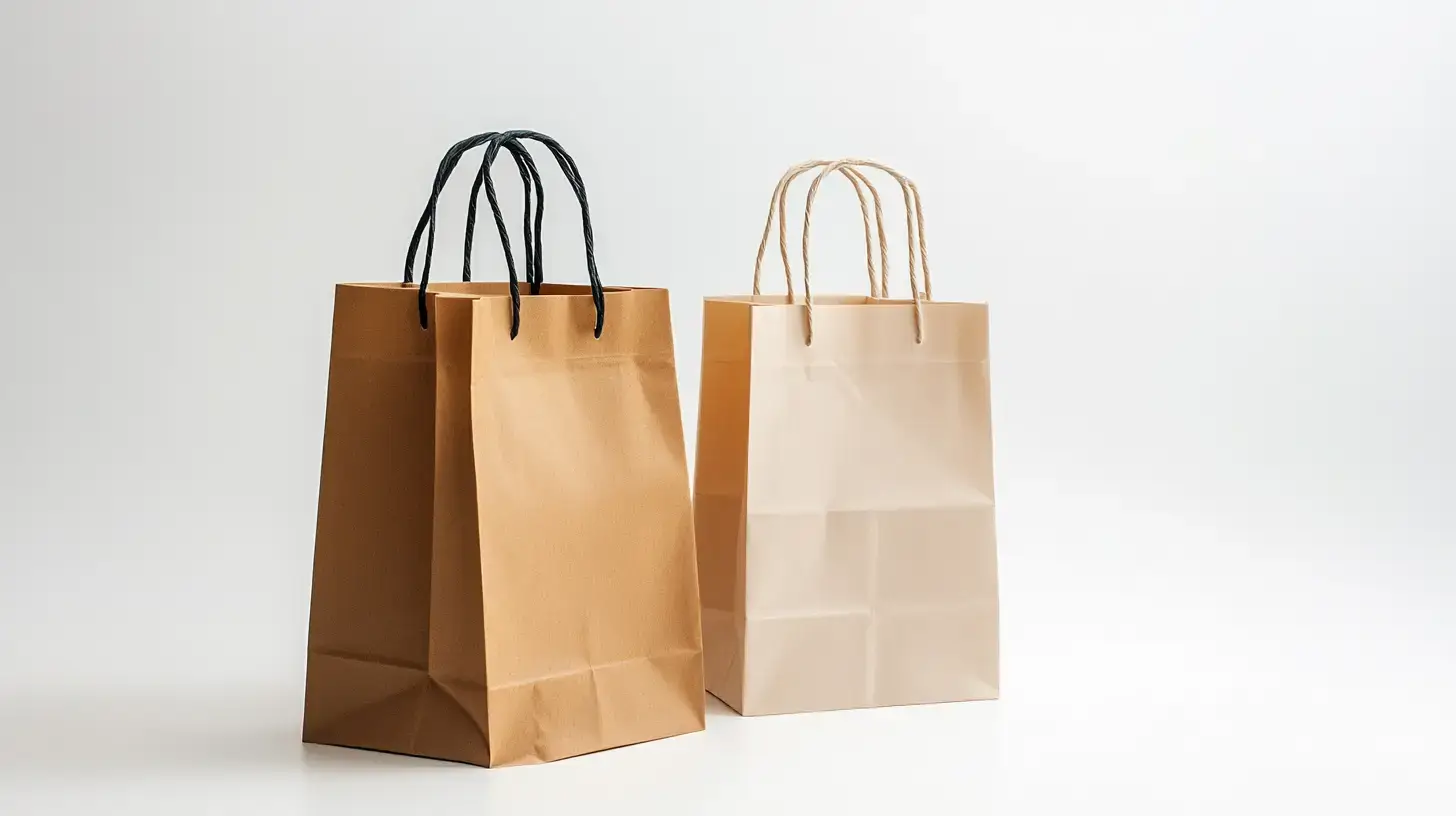
The instinct, the moment a business switches to paper bags, is to put the logo on everything. Sometimes that is exactly right. Just as often, it is money that would have worked harder somewhere else. A custom-printed bag is a genuine marketing asset in one setting and an expensive way to carry a sandwich in another — and the difference is worth understanding before you commit to a print run.
This is a straight guide to when a branded bag earns its cost, when a plain stock bag does the same job for less, and how to tell which situation you are in.
The honest distinction
Stock bags are ready-made and unbranded — plain kraft or white, in standard sizes, available off the shelf. They carry little or no minimum order, cost the least, and ship immediately.
Custom bags are made to your specification: your print, your colours, your size, finish and handle. They cost more per unit, carry a higher minimum order quantity, and take production lead time to make.
Neither is “better” in the abstract. The only useful question is which one fits the job in front of you — and that depends almost entirely on whether the bag is doing brand work or simply doing a job.
When a custom bag is worth it
A custom bag pays for itself when the bag is seen. If a customer carries it out of your shop, down a mall, through a hotel lobby or home on public transport, the bag is working as marketing the entire time — and a printed one is buying you visibility that a plain bag gives away for free.
It is worth it when presentation is part of the product. For premium goods, gifts and anything where the experience of receiving matters, the bag is part of what the customer is paying for, and a generic one quietly cheapens it.
And it is worth it when your volume justifies the run. If you will comfortably use a custom order before your branding or sizing changes, the higher minimum is simply a lower unit price at scale. A custom bag also earns its place when it is part of a consistent brand system — when the bag, the box and the storefront should all look like one brand rather than three.
When stock is the smarter choice
Stock bags win more often than brand-led thinking admits.
They are the right call for anything the customer does not see — bulk transport, back-of-house handling, internal movement of goods. Branding a bag nobody looks at is spending for no return.
They are right when volume is low or unpredictable. A custom minimum can leave a small or seasonal business sitting on thousands of bags it will not clear, tying up cash and storage in stock that ages. Stock bags let you buy what you need, when you need it.
They suit the early stage, before you have locked your sizes, your branding or your real volumes. Committing a large custom run while you are still testing the market is how businesses end up with a pallet of the wrong bag. And they win on time: custom needs lead time, while stock ships now — which matters when a launch or a season is closing in.
Finally, they are often enough for price-led, high-churn use. For thin-margin takeaway where the bag is purely functional and not a brand moment, plain stock — or stock with a simple single-colour stamp — frequently does everything that is actually required.
The middle ground most brands miss
The choice is rarely as binary as “plain or fully printed”. Semi-custom sits between the two and is where a lot of businesses should start: a stock bag finished with a stamp, a printed sticker, a branded ribbon or a single-colour print on a plain blank. It captures much of the brand effect at a fraction of the cost and minimum of a full custom run.
For a growing business, semi-custom is often the right bridge — it puts your brand on the bag while volumes and designs are still settling, without the commitment of a full print order. Move to fully custom once the demand and the specification are proven.
How to decide: five honest questions
Run the situation through these before you order:
Will the customer actually see and carry this bag? If yes, lean custom; if no, stock. Do you move enough volume to clear a custom run before your branding or sizes change? If not, stock or semi-custom. Is presentation part of what you are selling, or is the bag purely functional? Is your specification locked, or are you still testing? And what lead time can you genuinely afford before you need bags in hand?
Most decisions answer themselves once these are on the table.
Don’t over-buy to chase a unit price
The most common and most expensive mistake is ordering a large custom run of a single size purely to hit a low per-unit price — then discovering the size is wrong, the print colour drifted, or the branding has moved on. A lower unit cost on the wrong bag is not a saving.
The honest sequence is the boring one: see samples, confirm the specification on a small quantity, and only then scale to a full run. Manufacturers that carry both stock and custom printed paper bags, VITA GROUP among them, will supply samples of each — the cheapest way to test the difference in the hand before any money is committed. It costs a little patience and saves a great deal of it later.
The bottom line
Custom bags are worth every dirham when the bag is a brand touchpoint the customer sees and remembers. Stock bags are the smarter spend when the bag is doing a job nobody is watching, or when your volumes and branding are not yet settled. Most businesses need some of both — and the ones that decide deliberately, rather than printing everything by reflex, spend far less for a better result.