


Introduction
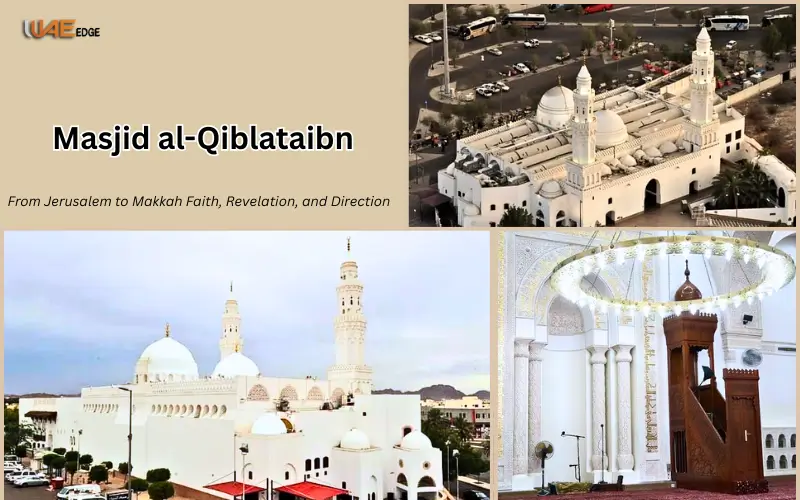
Masjid al-Qiblatain is one of the most sacred places in Islam. Few other holy sites have the weight of spirituality, depth of history, or theological significance that Masjid al-Qiblatain has. It is more than just a mosque; this is a living testimony to the moment Islam’s physical direction for worship was forever changed. This has reshaped Muslim identity in all future generations.
Masjid al-Qiblatain, located in Medina’s blessed city, continues to inspire its followers with its message of total obedience, unity and submission to Allah’s command.
Overview
| Aspect | Details |
| Mosque Name | Masjid al-Qiblatain |
| Meaning | Mosque of the Two Qiblas |
| Location | Medina, Saudi Arabia |
| Year of Event | 2 AH (624 CE) |
| Unique Feature | Change of Qibla during prayer |
| Original Qibla | Bait al-Maqdis (Jerusalem) |
| Final Qibla | Kaaba, Makkah |
| Religious Status | One of the most historically significant mosques in Islam |
Location
Masjid al-Qiblatain lies approximately five kilometers north of Masjid an-Nabawi, in Medina. The mosque is accessible via road, and pilgrims who are performing Hajj or Umrah often stop here during Ziyarat Tour.
While there is no obligation to pray here, some visitors do choose two rakahs to connect spiritually with the defining moment of Islamic History.
| Detail | Information |
| Distance from Masjid an-Nabawi | Approx. 5 km |
| City | Medina |
| Transport Access | Road, Ziyarat buses |
| Visiting Type | Optional religious visit |
| Prayer Obligation | Not obligatory |
Why Masjid al-Qiblatain Commands Global Reverence
Masjid al-Qiblatain means The Mosque of the Two Qiblas. Its unique name captures the mosque’s unparalleled position in Islamic history. This refers to an extraordinary incident when Muslims were told by Allah, during prayer, to switch the Qibla over from Bait al-Maqdis in Jerusalem to Kaaba, Makkah.
This is a distinction that no other mosque in the world can claim.
It was more than a change of direction. This was a declaration of spirituality that marked the independence of the Muslim Ummahand established the Kaaba as a central symbol for Islamic worship.
A Glimpse Into the Early Days of Islam in Medina
Muslims had just begun to form their religion when the Prophet Muhammad moved from Makkah, Saudi Arabia to Medina. They were refining their practices through divine guidance and prayer had already been firmly established in Islam.
At this time, Muslims received instructions to face Jerusalem when praying. The direction symbolised continuity with the earlier prophets, while Islam was established as an ultimate and complete message.
Masjid al-Qiblatain, located near Banu Salama a respected tribe in Medina, served as an area for communal prayers by early Muslims.
Moment That Changed the Qibla Forever
The Prophet was given a divine command to face the Kaaba during a group prayer. This happened in 2 AH (624 C.E.). He changed his direction without hesitation in the middle of a prayer, and all of his companions immediately followed.
There was no doubt, delay, or confusion.
The Quran records this incident in Surah Al Baqarah. It affirms that Allah directs whomever He pleases, and true faith is found in the submission of oneself, rather than in direction.
The Masjid al-Qiblatain was transformed into a symbol of eternal faith through action in merely ten seconds.
Deep Religious Meaning Behind the Change of Qibla
It was not just a matter of physical direction. The change of Qibla established the clear spiritual center and its distinctive identity.
The Kaaba brought Muslims together from all over the world, regardless of their cultures and languages. Every believer, whether in Medina or Makkah or even thousands of miles apart, was now aligned with a singular direction of devotion.
Masjid Al-Qiblatain is referred to as:
- Submitting to the divine will
- Unity of the Ummah
- You can trust in Allah’s wisdom
- Separation of previous religious structures
From Two Mihrabs to One: Architectural Evolution
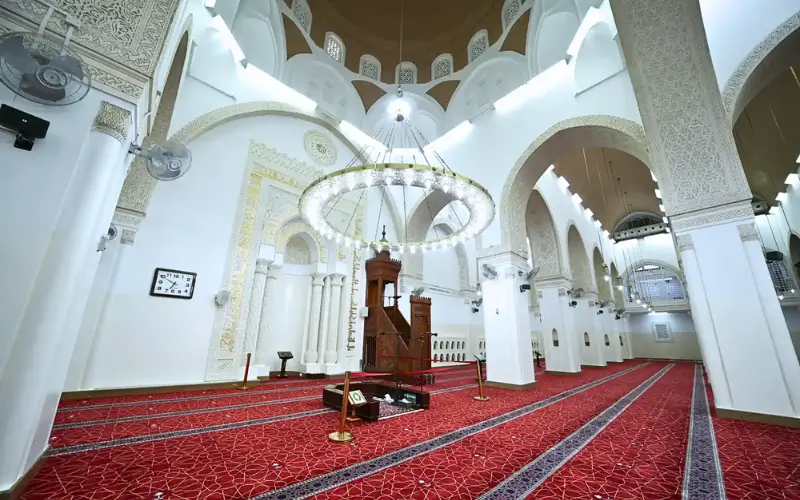
Masjid al-Qiblatain was historically equipped with two mihrabs. One faced Jerusalem, and the other Makkah. The physical features served as an architectural reminder of the Qibla change.
To avoid confusion, over time the Jerusalem-facing mihrab has been removed, and today only the Kaaba facing mihrab remains. Saudi authorities carried out modern renovations to the mosque that preserved its spirituality while improving comfort for worshippers.
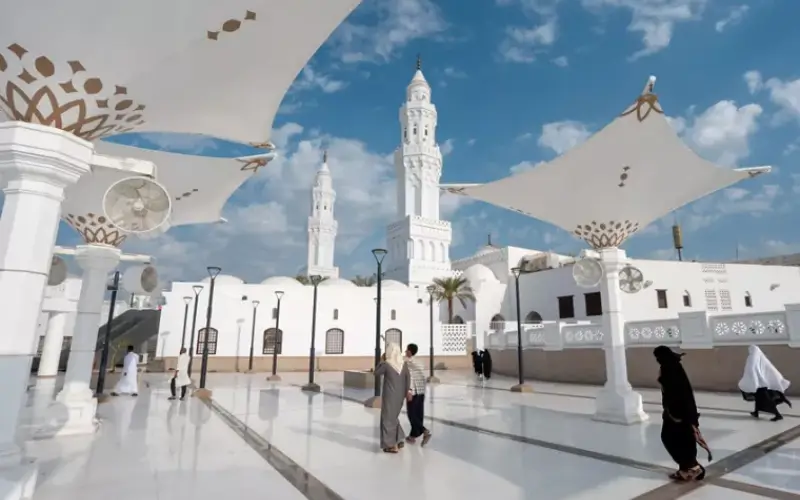
The clean, white exterior and calm interior of the temple reflect humility and simplicity and its focus on worship. This is in perfect alignment with its historical purpose.
Lessons Modern Muslims Learn From Masjid al-Qiblatain
It teaches lessons that are timeless and still relevant. The mosque reminds the believers that action is more important than words in proving their faith. The believer obeys Allah’s command without hesitation.
This also helps to teach flexibility in obedience. They did not follow their own reasoning or habits; instead, they listened to the revelation. It is important to maintain a modern mindset while still adhering to Islamic principles.
Masjid Al-Qiblatain is a silent educator, encouraging Muslims to align the hearts of their souls with divine guidance just like they do when aligning their bodies during prayer.
Masjid al-Qiblatain and Its Spiritual Connection to the UAE
Although Masjid al-Qiblatain is located in Medina itself, it has a profound influence on Islamic architecture and spirituality worldwide, including the United Arab Emirates.
The Mosques of the UAE and in particular Sheikh Zayed Grand Mosque reflect the core principles established by Masjid al-Qiblatain, Unity in Worship towards the Kaaba.
Every mosque in the UAE–regardless its size–is aligned towards Makkah. This reinforces the Qibla which was originally ordained by God at Masjid al-Qiblatain. It is a testament to the fact that a moment from Medina has shaped Islamic practices across cultures and nations.
Why Pilgrims Feel a Unique Spiritual Connection?
Visitors describe feeling a sense of deep reflection while praying in Masjid al-Qiblatain. It is a spiritual and emotional experience to know that companions stood in the same place and immediately turned toward Allah’s command.
The mosque’s story, its obedience and its legacy are what move people, not just the size.
Also visit: Dubai Science Park: Innovation Hub for Science, Healthcare, Research
FAQs
What is the meaning of Masjid al-Qiblatain, or Mosque of Two Qiblas in Arabic?
It is because it’s the only place where you can pray facing both Qiblas at once, first Jerusalem and then Makkah.
Is it still possible to find two mihrabs in Masjid Al-Qiblatain?
No. Only the mihrab that faces the Kaaba is left today. During later renovations, the mihrab that faced Jerusalem has been removed.
Are there special prayers to be performed at Masjid al-Qiblatain?
No specific prayers are required. The visitor may choose to pray rak’ahs to seek closeness with Allah.