


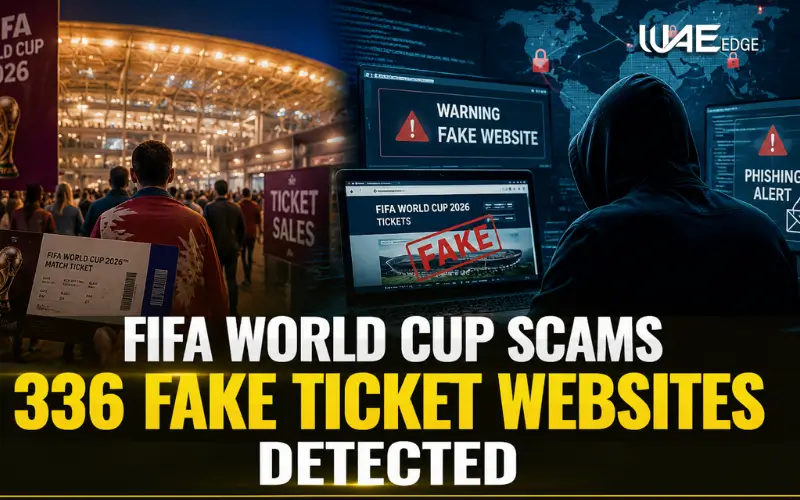
FIFA World Cup 2026 is only a few weeks off and cybersecurity experts are urging football fans to hold their nerve as they’ve found hundreds of fake World Cup 2026 sites that are trying to trick fans into handing over their credit card details in exchange for money and personal information.
Kaspersky security company has discovered 336 fraudulent websites mimicking official ones of the World Cup. The fake websites are being used for the sale of fake tickets for matches, fake packages for travel and accommodation in hotels and fake flight bookings.
As interest in the tournament grows, cybercriminals are exploiting it with the creation of convincing websites, which closely resemble the booking websites, said Olga Altukhova, Senior Web Content Analyst at Kaspersky. So far, 336 distinct domains have been identified that are disguising themselves as World Cup sources, Altukhova said.
UAE Football Fans Showing Strong Interest
With the FIFA World Cup 2026 underway in both the US and Canada, football fans of the UAE have been given a warning before they get excited about heading over to the host countries. Residents’ interest in attending the tournament has increased, said Dubai-based travel agency Travel Finder. The website already has some World Cup-related bookings and has received dozens of inquiries, the top one being for trips to the United States, according to founder Divya Jagga.
Travel packages are priced around Dh10,000 per person currently and vary in price according to the type of ticket and package. Some travellers, however, are wary because of the time delays to receive a visa and general travel risks.
Artificial intelligence is making scam attacks more advanced than ever in the online world, cyber security experts warn. Da Vinci is now a leading player in the market as criminals could easily build a site with a professional look very similar to a brand’s and booking site, says Dr Claude Fachkha, Cyber security and AI consultant, Associate Professor at University of Dubai.
Today, not only are there a lot of bogus websites, but it takes them very little time to come up with a new one, too, he said. As AI tools are becoming increasingly adept at producing realistic website designs, professional-like marketing materials, convincing emails, and polished social media campaigns, experts warn that it’s easier than ever for criminals to create such campaigns quickly and efficiently.
The fact that there were once distinct clues to find out if the site was a scam, such as mistakes in spelling and failing to be well designed, is not the case anymore, said Associate Professor of Cybersecurity Mehak Khurana at Canadian University Dubai. She said that many fake websites look virtually identical to official sites making it harder for the general public to tell the difference.
Social Media Becoming a Major Target
Social media sites are among the biggest avenues for the World Cup scams, according to cybersecurity analysts. Phishing ads, sponsored posts, and fake ads that offer rebates, free visa processing, access to exclusive tickets or limited-time deals are common tactics employed by fraudsters. The strategies aim to instill an FOMO factor and panic fear amongst fans hoping to get in. Repeatedly viewing the ads and promotions for tickets can put pressure on users to make hasty purchases, experts warn, before verifying the source.
Risks Go Beyond Losing Money
Most victims find that much more serious consequences could occur than just losing money from fake ticket purchases, said cyber security experts. Deceptive sites ask for passport and ID information, payment card data, email and phone numbers. This information can then be used for ID theft, ATO and future phishing attacks if it is collected. Victims might not be aware that their personal information has been compromised until months after transacting with a merchant, experts say.
How Fans Can Stay Safe
And there are some things that cybersecurity experts advise you to do before you buy World Cup tickets or travel packages:
- Purchase tickets only from authentic and authorized sources.
- Look for e-sites with misspellings or alternative domain names.
- Stay away from deals with prices that seem too low.
- Check the travel agency or booking site if you are about to make payments.
- Use multi-factor authentication on vital internet accounts.
- Beware of email and social media “promotions” or messages that arrive without your invitation.
- Check suspicious links with security software (VirusTotal, WHOIS).
With the tournament fast approaching and people plagued by flight and accommodation reservations, scams are likely to grow in number. As thousands of fans gear up for the FIFA World Cup 2026, cybersecurity experts are warning football enthusiasts to be wary of any booking website they might use, urging them to double-check all sources before inputting personal details or paying online.


