


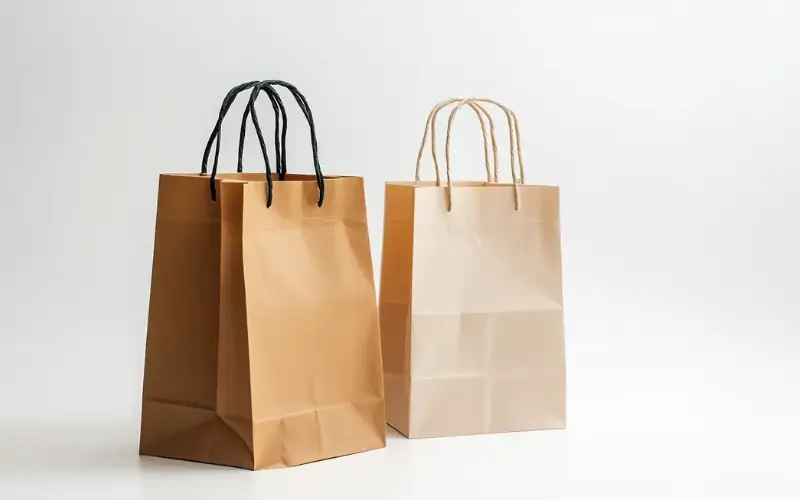
Ask two suppliers to quote the same paper bag and the numbers can differ by a factor of three. To a buyer seeing only the final figure per unit, that looks like one of them is overcharging — or one of them is cutting corners. Usually neither is true. The quotes are describing different bags, and the difference is buried in specifications that never make it into the conversation.
Understanding what sits behind the number is the difference between negotiating well and simply choosing the cheapest line on a spreadsheet. Here is where the money actually goes.
Paper weight is the foundation of the cost
The single largest driver is the substrate. Paper is bought by weight, so a bag at 150 GSM costs materially more than the same bag at 90 GSM — you are literally buying more material.
This is also where the cheapest quote usually comes from. A supplier can undercut a competitor substantially just by dropping the grammage, and on a rendered mock-up the two bags look identical. They do not behave identically: the lighter one carries less, creases sooner and tears at the handle. When two quotes diverge sharply, the paper weight is the first thing to compare — and if a quote does not state it, that omission is the answer.
Size, and the part buyers forget
Cost scales with the surface area of the flat sheet, not with how large the bag looks when it is standing up. That has a practical consequence: the gusset — the folded side and bottom panels that give the bag its depth — adds material across the whole height of the bag. A deep gusset can cost more than a taller, flatter bag, which is counter-intuitive if you are thinking in terms of visible dimensions.
Non-standard sizes carry a second penalty. Standard formats run efficiently on existing tooling; a bespoke size can mean more waste in the sheet layout, and sometimes new dies. If your product fits a standard size comfortably, taking it is one of the easiest savings available.
Print: colours, not coverage
Printing is priced primarily by the number of colours, because each colour is a separate pass or plate. Moving from one colour to four does not simply add ink cost; it adds set-up, plates and press time. A single-colour logo on kraft is dramatically cheaper than a full-colour wraparound design, and for many brands it looks better anyway.
Two related factors matter. Specified Pantone matching costs more than approximate colour, because it demands control and often a dedicated ink. And full-bleed coverage across the whole bag uses far more ink and takes longer to dry than a compact printed area. If budget is tight, reducing the colour count almost always saves more than shaving grammage — and it costs you nothing in durability.
Handles are a bigger line item than expected
Handles vary enormously in cost, and the reason is labour as much as material. Die-cut handles are effectively free: the hole is punched from the bag itself. Flat paper handles are cheap and run fast on automated lines. Twisted paper handles cost more but remain machine-applied at volume. Rope and cotton-cord handles, fixed through eyelets, are the most expensive by a wide margin — they are frequently hand-finished, which puts labour, not material, at the centre of the price.
The jump from a twisted handle to a rope handle can move the unit cost more than a change in paper weight. It is worth deciding deliberately rather than by default.
Finishes and coatings
Every finish added is a separate production stage. Film lamination in gloss, matte or soft-touch adds material and a pass through another machine. Foil stamping, embossing and spot UV each mean additional tooling and handling. Barrier coatings for grease or moisture add cost too — though for food applications they are not optional, and skipping them is a false economy that shows up as stained, leaking bags.
The useful discipline here is to ask what each finish is doing. A soft-touch laminate on a luxury retail bag earns its cost in perceived value. The same laminate on a bag that will be filled once and binned does not.
Quantity: the factor that moves the number most
Nothing changes the unit price like volume, and the reason is set-up. Plates, dies and press make-ready cost roughly the same whether you print 1,000 bags or 50,000 — so that fixed cost is divided across the run. It is why a supplier’s price per bag can halve between two quantities, and why quotes are meaningless without the quantity attached.
The trap is obvious in hindsight: ordering far more than you need purely to reach an attractive unit price is not a saving if the bags sit in storage, tie up cash, or become obsolete when your branding or sizing changes. The genuinely useful question is cost per bag used, not cost per bag ordered.
The costs that are not on the quote
Several real costs sit outside the per-unit figure, and they are where budgets quietly break.
Tooling and set-up — dies for a custom size, plates for a print design — are usually one-off charges, which means they weigh heavily on a first order and much less on repeats. Freight and duties matter enormously in a market like the UAE, where a large share of packaging is imported: a low factory price from overseas can be overtaken by sea freight, clearance and lead-time risk, while local stock costs more per unit and lands in days. And samples and proofs carry a small upfront cost that is trivial compared to discovering a colour or size error across an entire run.
An experienced paper bag manufacturer UAE buyers can work with — VITA GROUP among them — will normally break a quote into these components rather than presenting a single figure, which is what makes two offers genuinely comparable in the first place.
How to compare quotes properly
When two numbers differ, do not assume the gap is margin. Line the specifications up: paper weight in GSM, exact dimensions including gusset, number of print colours, handle type, finishes, and the quantity each price is based on. Then confirm what is excluded — tooling, freight, samples.
More often than not, the cheaper quote turns out to describe a lighter bag with a simpler handle, and the comparison answers itself.
Spending where it shows
If the budget is fixed, the sensible order of priorities is unglamorous. Protect the paper weight and the handle, because those determine whether the bag survives use — failure there is what customers actually notice. Economise on colour count and decorative finishes, which cost real money and carry no structural consequence. Standardise wherever possible to avoid bespoke tooling. And order to your genuine consumption rather than chasing a headline unit price.
A paper bag has no single price, only a specification with a price attached. Once you can read the specification, the quotes stop looking arbitrary — and you can tell, quickly, which supplier is offering value and which is simply offering less bag.
Must Visit: Saqr Park Ras Al Khaimah | Timings, Entry Fee, Activities & Visitor Guide