


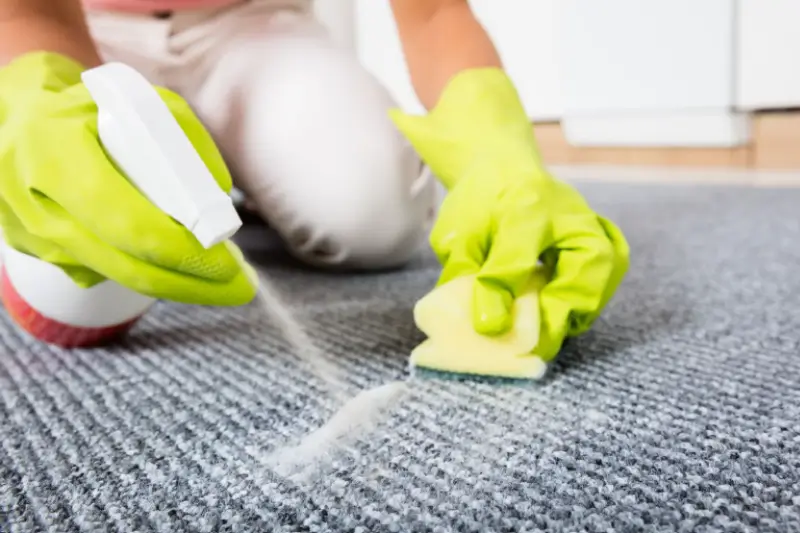
Nobody expects a wine glass to slip out of their hand during a movie night or the dog to have an accident while in the middle of the living room. Carpet stains occur to anyone, and there are things in your kitchen cupboard that can help remove most of them. This book shows you exactly how to get rid of stains on your carpet—immediately after the spill, as well as the special techniques for handling wine stains, coffee stains, pet stains, blood stains, grease stains, and ink stains. Drawing on practical carpet care knowledge shared by Shoukat Interior, these methods are simple, effective, and suitable for most household carpets.
Why Speed Matters More Than the Product You Use?
The most important determinant of stain removal is speed of response. A new spill is simply on top of the carpet fibers. After 20 minutes, it begins to move to the bottom of the padding, where it fuses with the material and becomes very difficult to pull up. This is why, even if you only use a basic damp cloth, applying it to the spot is better than using an expensive carpet stain remover later.
Fresh Stains vs. Old Stains: Why the Approach Changes
When it comes to a fresh stain, time is of the essence. In many cases, blotting the liquid dry in the initial few minutes—the time it takes for it to penetrate deeper—is the only action necessary to avoid a permanent mark. The job is completed with a mild soap or vinegar solution.
| Fresh Stains | Old / Dried Stains | |
| Where it sits | Mostly on the surface of the carpet fibers | Has soaked into the fiber core and often the padding underneath |
| Best first step | Blot up excess liquid immediately | Rehydrate the area slightly before treating |
| Cleaning approach | Light soap-and-water or vinegar solution | Stronger treatment, hydrogen peroxide, oxygen cleaner, or enzyme formula |
| Number of treatments needed | Usually resolves in one pass | Often needs several rounds, sometimes over a couple of days |
| Risk of residue/shadowing | Low, if blotted properly | Higher; tannins and dyes can leave a faint mark even after the stain “lifts” |
| Realistic outcome | Full removal is common | Significant fading is likely; complete removal isn’t always guaranteed |
If the stain is an old one and set in, the fibers have already absorbed and blended with the substance that caused the stain, and a light cleaning on the surface will not reach them. To remove various types of stains, moisten with warm water first before applying a stronger solution, such as hydrogen peroxide for protein stains, or an oxygen-based stain remover for stains like wine or coffee; if the stain is odorous, use a special stain remover with enzymes. Don’t get your hopes up that it will be eliminated by a single application, but anticipate a repeat of the process and allow the area to dry out between applications. If a major stain is considerably old, particularly if it has been really within the carpet for months, then carpet cleaning professionals with steam machines may be the only solution when it comes to a good deal of carpet cleaning.
The lesson: the younger a stain, the more chance for using what you can at the time, and downshift the expectations, and the force used when you clean, as the stain gets older.
Supplies to Keep on Hand for Carpet Stain Removal
Do not use a range of specialty cleaners for most spills. A stain removal kit, which you can get in a little can, fits into almost all stains:
- Clean white cloths or paper towels (colored cloths can stain the carpet.)
- A spray bottle
- White distilled vinegar
- Hints and tips are appreciated. Hints and tips welcome.
- Baking soda
- Hydrogen peroxide (on tougher, protein-based stains)
- Use a soft bristle brush and a vacuum.
Having them all concentrated in a specific location will prevent them from going around the house as you scramble around trying to locate them.
The Golden Rule: Blot, Never Rub
Every professional cleaner of wall to wall carpets in Dubai will tell you the same thing: rubbing a stain is the fastest way to ruin your carpet. Rubbing grinds the spill deeper into the fibers, frays the pile, and can spread the mark into a much bigger patch than what you started with.
Rather, apply a cloth directly to the stain and remove it from the stain from the rim to the center. Do not push liquid deeper into the carpet. Once color transfers to part of the cloth, change to a different clean area until none of the color continues to transfer.
A General Step-by-Step Method for Fresh Spills
This simple procedure works well for most stains, from juice to soda, to break messes (like a falling plate of food) as quickly as possible:
- First remove any solids. Scoop up food, mud, or trash using a spoon or dull knife before it hardens.
- Use a dry white cloth to pat away the wet until just moist.
- For most home messes, a gentle cleaning solution, like 1 teaspoon of dish soap in a cup of warm water, will suffice.
- Take care with the solution and use sparingly by spraying or using a cloth—just damp but not soaked.
- Allow to sit for 5-10 minutes to aid in releasing the residue.
- Repeat with a clean, damp cloth to rinse, then a dry cloth to absorb any moisture.
- Allow the carpet to dry out and then vacuum when the carpet is dry to “fluff” the carpet fibers back.
On some natural fibers and dyes, different solutions can affect the colors differently, so test any solution at the back of the carpet or in an inconspicuous area.
How to Treat Specific Carpet Stains
The methods used for removing different stains do not work with every stain, so a universal “fix it” routine will not always get you the job done. These are some of the most effective ways to handle messes that people tend to encounter the most.
Red Wine Stains
As soon as you can, blot up the wine from the cloth, apply salt or baking soda to the stain, and let it sit for a few hours before lapping it up further. After drying,g vacuum it up. To treat a permanent stain, gently apply one part dish soap to two parts hydrogen peroxide and blot; rinse after a few seconds and blot again.
Coffee and Tea Stains
Rub off as soon as possible, and then rub with a combination of dish soap, white vinegar, and warm water. Coffee and tea products should not be treated with a strip and stain type of cleaner because they will leave a faint shadow in the area even after the color is picked up, so for best results, treat the stain a second time.
Pet Stains and Urine Accidents
Dry as much as possible and then clean the area with cool water and dry it again. For pet accidents, it’s absolutely worthwhile purchasing an enzyme-based cleaner; it will decompose proteins that leave spots and also residual scent, whereas regular soap won’t completely neutralize the scent.
Blood Stains
Use cold water only, as cold water will not bond to fibres and make them permanent. Dab with cold water and some dish soap, going from the outside in. The hydrogen peroxide used with a cloth will fizz as it dissolves the stain, but because it can lighten some carpet dye, it’s recommended that it be tried on a hidden stain before being used on other carpets.
Grease and Oil Stains
Pour baking soda or cornstarch on the area and let it sit for 15-20 minutes to absorb the oil, and vacuum. When these leave behind a mark, spray with a dab of dish soap (which cuts through grease) and blot dry.
Ink Stains
Gently blot the stain away with rubbing alcohol using a ball of cotton to blot inward in order to not spread the stain further. It’s a process you may need to do a few times, as ink can be tricky to remove, switching to a fresh, clean area of cloth each time.
DIY Carpet Cleaning Solutions Worth Keeping Around
There are several light and easy mixes to handle most occasions:
- Bleach solution: four parts water to one part bleach; use for general cleaning of spillages and light odor removal on synthetic carpet.
- Warm soap solution: 1 teaspoon of mild dish soap per 1 cup of water – safe to use on most carpet types and can be used daily.
- Dry soap: actually a highly abrasive paper coating, useful for removing dirt from dried stains.
- Hydrogen peroxide mix: used last for tough spots such as blood, pet stains, etc., that are protein-based; apply spot test before!
Do not use vinegar solutions on wool, silk, or antique-made rugs because natural dyes may be lost and delicate fibers will be damaged.
Commercial Carpet Cleaners: When Store-Bought Beats DIY
Most spills can be dealt with using homemade solutions, but there are occasions when a store-bought formulation will work better, will work faster, and can completely remove a stain when homemade solutions cannot – particularly for stains that have already set or are comprised of proteins and oils.
Enzyme Cleaners
Enzyme cleaners rely on bacteria or enzymes that “digest” organic material such as urine, vomit, bodily waste, and other protein-based stains. Not only do they cover up the stain, they actually work on the molecular level to break down the source, which is why they are effective in removing residual odors that regular soap will not remove. The ones to have on hand for any pet accident and are typically mild enough to be used regularly on most carpets.
Oxygen Cleaners
Oxygen-based cleaners (also known/labelled as “OXY” formulas) provide oxygen bubbles to lift dirt, clean without the chemicals of chlorine bleach, and remove tough stains such as coffee, blood, or wine stains. Most carpets will be safe, and typically they will work on previously dried stains which can be taken away by soap and water, leaving an imprint.
Carpet Stain Sprays
Spray-on stain removers are pre-mixed for quick stains but are not always easy to make; spray on the stain and let it sit for the amount of time recommended on the label; blot. Many mix them with mild solvents, which makes them a good compromise between an auto-mixed treatment with a dish soap or a complete enzyme/oxygen treatment. These are particularly useful when working on a stain out of the home, which is on a vehicle or in the office and would not be easy to create a solution.
When to Reach for a Commercial Product Instead of DIY
The stain is of old origin or already set. A DIY solution will be effective at cleaning up fresh spills only, while a dried-in spill may require the more powerful breakdown action of an enzyme or oxygen formula.
- A protein or blood stain, urine, vomit, or bodily fluids, on which enzyme cleaners are superior to soap in that the enzyme itself removes the stain rather than just the top coat of color.
- Smells are a contributing concern. Vinegar and baking soda are a temporary solution, while enzyme cleaners are designed to wash off the odor at the source.
- You have attempted self-help, and the mark is still visible. From this point, a focused commercial product will help you avoid the repetition of a non-working solution.
- The carpet is either a delicate or natural fibre (including wool, silk, and antique rugs); most commercial sprays are formulated and labelled with the fibre type that they are intended for, and the guesswork is out of the window.
- The following tips will help you avoid making these common mistakes that can make stains worse.
Common Mistakes That Make Stains Worse
- Rubbing rather than blotting, which will increase the stain and tear the pile.
- Applying hot water to stains such as blood, which does not rise, but sets with hot water.
- Wetting the carpet too much, causing it to get wet in the carpet padding, which can allow mold or a musty odor to grow.
- Not running the test spot – particularly using peroxide or vinegar… because you may get the patch and not the clean result.
When It’s Time to Call a Professional
While DIY techniques will treat most stains, there are a few instances that require professional carpet cleaning: stains that have been there for a good couple of weeks, or those covering large sections of your carpet afflicted by intense pet damage, or any natural fiber carpet—especially bamboo—where home remedies cause serious damage. During a professional service, steam cleaners will arrive with special products and tools that will penetrate deeper into the pile than your spray bottle ever will!
Keeping Carpets Stain-Free Going Forward
After-discharge is much less time-consuming than prevention:
- Tidy up high-trafficked areas at least twice a week to prevent abrasion of fibres by dirt build-up.
- Put a “shoes off” policy in place at the entrance of the house as one of the main causes of dirty carpets is outdoor dirt.
- Immediately treat spills – have a small stain kit nearby.
- Train footwear to rest on a rug or runner in entryways and hallways to prevent the worst of dirt from being tracked along the floor and to the main carpet.
Final Thoughts
In-the-moment carpet stains of any amount seem like a crisis, but with the proper method and some patience, most carpet spills can be treated at home. Clean your carpet swiftly, blot instead of rub, match cleaning approach to the type of stain, and your carpet will remain great-looking for years to come.
Must Visit: Sarab 2B Emirates Crew Accommodation Dubai – Complete Guide 2026
Frequently Asked Questions
Does baking soda get rid of carpet stains?
Yes, but it’s more suited as an optional than a standalone cleaner. Baking soda has been a great material for absorbing grease, moisture, and odors, and it can be useful at removing new stains when used as a paste. Soap and detergent or vinegar used with a strong stain such as wine or coffee is more effective than soap and detergent alone.
Does vinegar damage carpet?
Af dilute vinegar solution is safe for most synthetic carpets, such as nylon, polyester, and olefin, which account for the bulk of carpets sold. Vinegar is an acid, however, it can fade dyes and remove natural oils on wool, silk, or antique handmade rugs. It should always be watered down and tried on an inconspicuous area before use anywhere that would be noticed.
Are there risks in using bleach on carpets?
Usually not, since bleach can be very damaging to most carpet fibers, particularly dyed and synthetic carpeting. When you can only think of using bleach on a stained carpet, you’re likely in trouble, and it’s time to hire a professional carpet cleaner instead. If the stain is that bad, bleach is likely the only thing you can think of using, and that should be a warning sign to call a carpet cleaner for help instead, as they have more varied and, importantly, carpet-specific carpet solvents and whiteners.
What’s the best homemade carpet cleaner?
Everyday spills and messes can be cleaned up with a cup of warm water with 1 teaspoon of mild dish soap, with no fear of damaging color or/or fibers. If the stain is more difficult or older, using a diluted vinegar solution or hydrogen peroxide mixture (if it’s a protein-based stain such as blood or mucus) is more effective. It doesn’t matter there’s no one right or wrong formula, it depends on the type of stain and the period of time it’s been around.
What is the way to get rid of the old carpet stains?
If it’s a residue caused by a spill, dampen the area first to loosen residue so you can get the stronger cleaner to be applied, then use hydrogen peroxide (an oxygen cleaner) or a stronger spill than normal. Rinse off in several passes rather than in one pass, and be aware that there may be some fading or shadowing left after rinsed since this results in multiple passes.
Is it possible to get rid of carpet stains?
Yes, and more prevalent than people might realize. This typically occurs when there is something that does not wash up properly and leaves a sticky mess behind that draws dirt and in some cases leaves stains “wicking” back up on the carpet as it dries. The key is to rinse off the cleaning solution completely and blot until dry and not just when the solution is cleared.
How long does it take baking soda odor to eliminate?
It takes about 15 minutes to an hour to absorb moisture and absorb light odors. If it’s an older grease stain or tougher stains, leaving it overnight or for many hours will provide more time to strip the stain from the fibers. Once completed, vacuum well to remove any crumbs.