
It Starts With Chewing
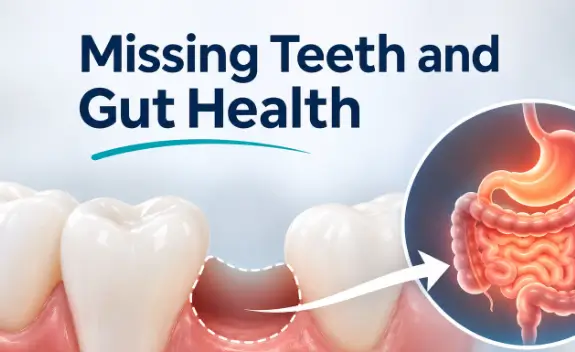
Most people think of missing teeth as a cosmetic problem. A gap in the smile, an awkward moment during a photo, maybe some difficulty biting into an apple. But there is a less visible consequence that does not get enough attention: how missing teeth impact digestion and, eventually, gut health.
Digestion does not start in the stomach. It starts in your mouth. Chewing is the first mechanical step of breaking food into smaller particles. Your teeth grind food down, your saliva mixes enzymes into it, and the result is a well-prepared bolus that your stomach can process efficiently.
When teeth are missing, especially molars, this process breaks down.
What Happens When You Cannot Chew Properly
Molars do most of the heavy lifting when it comes to chewing. If you lose one or two molars, the remaining teeth pick up the slack, but they are not built for it. Over time, people with missing teeth tend to chew less thoroughly and shift toward softer, easier-to-eat foods.
This means more processed carbohydrates, less raw vegetables, less fibre, and less variety. You may not notice the shift right away, but your digestive system will.
Poorly chewed food reaches the stomach in larger pieces. The stomach then has to work harder to break it down, which can lead to bloating, discomfort, acid reflux, and slower digestion.
The Gut Pays the Price
Your gut microbiome, the community of bacteria living in your intestines, depends on the food you eat. A diet rich in fibre, whole grains, and fresh produce supports a diverse, balanced microbiome. A diet heavy in soft, processed food does the opposite.
Studies have shown that people with fewer natural teeth tend to have lower nutritional diversity. They eat fewer fruits, vegetables, and proteins that call for thorough chewing. Over months and years, this change can reduce the variety of beneficial bacteria in the gut.
A less diverse microbiome has been linked to a range of issues, including digestive irregularity, inflammation, weakened immunity, and even mood changes.
Nutrient Absorbing and Missing Teeth
Beyond the microbiome, there is a straightforward nutritional concern. When you avoid certain foods because chewing is painful or difficult, you may miss out on key nutrients.
Iron from red meat and leafy greens. Vitamin C from raw fruits. Fibre from vegetables and whole grains. Calcium from nuts and dairy. These are not easy to replace with soft food substitutes alone.
Over time, nutritional gaps can show up as fatigue, weakened bones, slower wound healing, and other bodily problems. And the root cause, missing teeth, is often overlooked during health examinations because it seems like a dental problem, not a medical one.
How a Tooth Implant Restores the Chain
This is where dental implants enter the conversation. A tooth implant replaces not just the visible crown but also the root beneath it. The titanium post is placed into the jawbone and, over several weeks, fuses with the bone through a process called osseointegration.
Once healed, the implant functions like a natural tooth. You can chew with full force, eat a varied diet, and stop avoiding the foods you gave up when the tooth was lost.
Unlike dentures, which can shift or reduce chewing efficiency by up to 40 per cent depending on the fit, dental implants stay fixed in place. This firmness allows you to eat steak, raw carrots, almonds, and salad greens without hesitation.
Restoring your ability to chew properly is far more than a dental benefit. It is a health benefit that affects digestion, nutrition, and gut balance.
The Psychological Side of Eating With Missing Teeth
There is also a social and emotional dimension worth mentioning. Many people with missing teeth avoid eating in public. They stick to foods that will not embarrass them, skip restaurants, and turn down meals with friends or colleagues.
This avoidance often leads to further dietary restriction. When eating becomes stressful rather than enjoyable, people default to the easiest option, which is rarely the most nutritious one.
A tooth implant can bring back the confidence to eat normally in any setting, which indirectly supports better dietary habits and, by extension, better gut health.
Other Health Effects Linked to Tooth Loss
Gut health is just one piece of the picture. Research has also connected missing teeth to:
- Jawbone loss. Without a tooth root stimulating the bone, the jaw gradually resorbs. Dental implants are the only replacement option that retains this stimulation.
- Shifting teeth. Adjacent teeth can drift into the gap, leading to bite changes and further oral health issues.
- Speech changes. Missing front teeth can alter pronunciation, which affects confidence and communication.
Each of these factors are able to reduce quality of living in ways that compound over time.
Conclusion
The connection between missing teeth and gut health is real but rarely discussed. When you cannot chew properly, your diet changes, your digestion struggles, and your gut microbiome suffers. A tooth implant addresses the root cause by restoring full chewing function, which has a chain effect on nutrition, digestion, and overall health.
If you have been living with a missing tooth and noticing changes in what you eat or how you feel after meals, it may be worth speaking with a dentist about dental implants as a long-term solution.
Contact Us
Residents of Dubai Silicon Oasis and surrounding communities are welcome to visit us for a consultation.
Magnum Dental Clinic – DSO
SIT Tower 101, Nr Choitram Super Market, above Baskin Robins Ice-cream, Dubai Silicon Oasis, Dubai, United Arab Emirates
Phone: +971 54 336 3340