

Grand Souk Bur Dubai is also called Old Souk, or Al Souk Al Kabir. It’s one of Dubai’s oldest heritage markets. This vibrant bazaar, located along Dubai Creek legendary creek, has been a commercial center since the 19th Century, drawing textile traders from India and Pakistan as well as East Africa.
The guide is comprehensive and covers all aspects of the souk, from its rich history and architectural splendor to shopping, prices, cultural etiquette and directions. It also includes hidden treasures and information on how to find them.
Location and Access
Bur Dubai is located opposite Deira along Dubai Creek.
How to Reach
Metro
- Al Fahidi Metro Station – Green Line – 7-10 minutes’ walk
- Al Ghubaiba Metro Station – Green Line – 10 Minutes’ Walk
By Abra (Traditional Boat) – Most Scenic Way
You can now cross Deira Old Market to Bur Dubai for just AED 1.
The short trip:
- Enjoy the best views of Dubai’s historic past
- You will be dropped off at the entrance of the Souk.
- Sets the mood for the perfect visit
Taxi
Taxis can drop you near Al Fahidi Street or Al Seef.
| Transport Option | Details | Cost | Travel Time |
| Abra (Traditional Boat) | From Deira to Bur Dubai | 1 AED | 5 minutes |
| Metro | Al Fahidi Metro Station (Green Line) | 3–7.5 AED | 5–12 minutes walk |
| Bus | Multiple RTA routes to Bur Dubai | 3–5 AED | Varies |
| Taxi | Available across Dubai | 12–30 AED inside the city | 10–20 min |
| Car | Public/paid parking nearby | 4–10 AED/hr | – |

History of Grand Souk Bur Dubai
A Marketplace Born on the Banks of Dubai Creek
Before oil changed the UAE economy, the Creek was the center of commerce. Bur Dubai became a trading port in the 1800s. Dhows carrying:
- Textiles
- Spices
- Pearls
- Handcrafted products
Bur Dubai’s Bur Deira side, which faces Deira, quickly became the gateway for Indian and Pakistani textile traders, making the Bur Deira souk an international trading hub by the beginning of the 20th century.
Historic Importance
- The oldest market in Dubai, it predates many of the modern souks
- Pre-oil boom helped shape economic growth
- The hub is a key link between Gulf textile traders and South Asian manufacturers.
- Long-standing cultural ties to Persia and India
Cultural Heritage
Dubai’s evolution is marked by the souk, which shows Dubai’s transition from a small trading settlement to a global powerhouse in commerce.
Soul and identity of the Souk
A Living Reflection of Emirati Hospitality & Traditions
It is more than a traditional market. The Grand Souk offers a vibrant cultural environment. You’ll find:
- Shops offer tea greetings and greetings
- Families that run businesses for several generations
- Traditions of bargaining
- The weaving of textiles using centuries-old techniques
It is a place where conversation, storytelling, and negotiations are at the core of business. This is where:
- Colours that overwhelm you
- Spices fragrance the air
- Lanterns light alleyways
- There is a constant sound of commerce in the streets
Architecture and Atmosphere
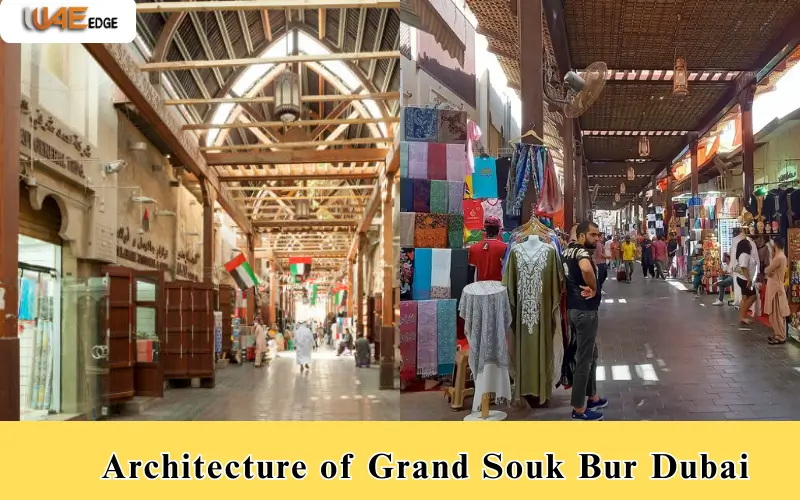
Grand Souk’s architecture is an example of Arabian style, and it has been carefully preserved in order to preserve its authenticity.
Architectural Elements
- Barjeel, the traditional wind tower
- Ceilings carved from wood
- The natural cooling effect of covered walkways
- Natural stone flooring
- Brick and coral wall
- Arches made of wood and lanterns for lighting
How It Compares to Modern Souks
| Feature | Grand Souk Bur Dubai | Madinat Jumeirah Souk |
| Atmosphere | Traditional, raw, authentic | luxurious, themed, modern |
| Architecture | Natural stone, wood, wind towers | high-end imitation of old Arabia |
| Price | Affordable | Premium |
| Experience | Heritage-focused | Entertainment-focused |
Old Souk is a less modernized market and offers more of a traditional experience.
Also Visit: La Mer Beach Dubai The Ultimate Seaside Lifestyle Destination
Hours of the Souk and best times to visit
Standard Opening Hours
- 10 AM – 10:00 PM
- Some shops are open till 10:30 pm
Ramadan Hours
- Similarities in general
- Deira hosts special Ramadan markets
Time to Visit
- The weather is cooler in the late afternoon and evening
- The Friday night crowd is the most active and vibrant
- Peaceful mornings, fewer people.
- Outdoor comfort from November to March
- High temperatures in May and October can be dangerous.
| Day | Timing |
| Monday–Thursday | 10:00 AM – 10:00 PM (or 10:30 PM) |
| Friday | 10:00 AM – 10:00 PM (Livelier evenings) |
| Saturday–Sunday | 10:00 AM – 10:00 PM |
| Ramadan | Usually normal hours, special markets |
Grand Souk: Treasures to be found
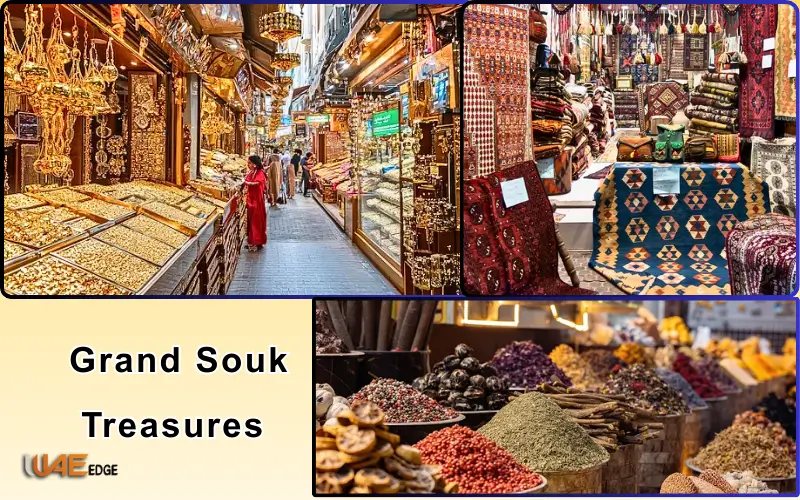
1. Textiles, Fabrics & Traditional Clothing
Textile lanes are a world-famous feature of the souk.
Popular Items
- Pashmina & cashmere shawls
- Raw Silk & Cotton Fabrics
- Abayas in Arabic
- Jalabas
- Indian-Pakistani Kurtas
- Emirati needlework – Embroidered Talli
Cultural Relevance
- Talli embroidery, a tradition unique to the Emiratis
- The fabric trade has been going on between Dubai and South Asia for centuries.
2. Spices, Herbs & Perfumes
Spices You Must Buy
- Saffron (Grade A Super Negin)
- Turmeric
- Cinnamon
- Sumac
- Nuts and dried fruits
- Spice mixes with clove, cardamom and other spices
Arabic Perfumes
Dubai’s strong Arabian scents are famous.
Best Perfumes Picks
- Oily waste
- Bakhoor incense
- Musk blends
- Amber fragrances
- Sandalwood Notes
Saffron of high quality has long, red threads and a deep, rich aroma.
3. Souvenirs & Local Crafts
Best Local Handicrafts
- Ceramics handmade
- Artifacts made of brass and metal
- Wooden carvings
- Miniature dhows
- Lanterns
- Plates Decorative
- Talli-decorated clothing
Checking Authenticity
- Small imperfections are common in handmade items
- Machine-made goods look too “perfect.”
- Ask the origin story of your shop
4. Jewelry & Semi-Precious Stones
The Grand Souk is a smaller version of Deira Gold Souk.
- Gold Jewelry
- Ruby and sapphire stones
- Silver Rings
- Beaded bracelets
- Traditional Yemeni jewellery
Comparison with Gold Souk Deira
| Feature | Grand Souk Bur Dubai | Gold Souk Deira |
| Focus | Textiles, crafts, spices, perfumes | Gold, diamonds, precious stones |
| Prices | Negotiable, accessible | Premium, fixed (market-linked) |
| Atmosphere | Traditional, cultural | Crowded, polished, commercial |
| Audience | Tourists, locals | Investors, luxury buyers |
Shopping Experience – Negotiation, Tips & Etiquette
Art of Bargaining
It is an expected part of culture to negotiate.
Smart Bargaining Guide
- Get 50% off the price quoted
- Merchants will appreciate your politeness
- Bulk purchases offer better savings
- Compare prices before finalizing
- Many sellers will contact you back if you walk away with gentleness
Guide to an Authentic and Pleasant Visit
What To Wear
- Dress modestly. (Shoulder & Knees Covered)
- Walking shoes that are comfortable
Practical Tips
- Cash (dirhams).
- Drink water during hot months.
- The friendly “Salam alaikum”, or greeting, goes a very long way
- Do not point directly at objects or people
Bur Dubai Souk: What’s the difference?
Why Bur Dubai stands out
- Madinat Jumeirah is more authentic than Madinat Jumeirah and has a less commercial feel.
- Gold Souk in Deira is more diverse than the Deira Gold Souk
- The historic district enriches the experience of culture
Suggested Souk Route
- Bur Dubai Grand Souk: Textiles and perfumes
- Get an abra from Deira for 1 AED
- Discover Gold Souk and Spice Souk
- Al Fahidi Historical District: A Walk Around
The old Dubai experience is a must-see on this itinerary.
Visit Nearby Attractions: What’s Around the Souk
- Dubai Museum (335m)
- Al Fahidi Fort (18th century)
- Al Fahidi Historical Neighborhood
- Sheikh Mohammed Cultural Centre
- Al Seef Heritage Waterfront
- Grand Mosque, a nearby landmark
Ideal 2-Hour Cultural Tour
- Discover Souk
- Abra to Deira
- Bur Dubai: Return
- Visit Al Fahidi Museum
- Al Seef Walk
Dining & Food – Where to Eat near the Souk
Local Restaurants & Street Food
Bur Dubai is an enchanting culinary experience that combines flavors from Emiratis, Iranians, Indians, and Pakistanis.
Where to Eat?
- Meena Bazaar – Indian and Pakistani snacks
- Al Ustad Special Kababs for Persian Grills
- Arabian Tea House for Emirati cuisine
- Al Fanar Restaurant offers traditional cuisine.
Local Food & Price Table
| Dish/Item | Description | Approx Price |
| Shawarma | Quick street snack | 5–8 AED |
| Harees | Wheat & meat porridge | 10–20 AED |
| Luqaimat | Sweet fried dumplings | 6–15 AED |
| Mandi / Kabsa | Arabic rice & meat | 20–35 AED |
| Persian Kebabs | Famous at Al Ustad | 25–40 AED |
| Tea / Karak | Strong milk tea | 1–3 AED |
Final thoughts – Why Grand Souk Bur Dubai is a must-visit
Grand Souk Bur Dubai offers more than just shopping. It is also a journey through Dubai’s history. Its narrow passages, the spice-filled atmosphere, the historic architecture and the vibrant traders capture the spirit of Dubai long before skyscrapers.
Also read: Paus Café Dubai – Healthy Food, Specialty Coffee & Wellness
Full Visitor Handbook for Ibn Battuta Mall Sheikh Zayed Road Dubai
FAQs
1. Grand Souk Bur Dubai is famous for what?
The shopping experience is characterized by textiles and spices.
2. When is Grand Souk Bur Dubai open?
Most shops are open from 10:00 am to 10:00 pm every day, but some may stay open till 10:30 pm.
3. What is the easiest way to reach a souk?
You can get to Deira by Abra (1 AED). You can arrive by RTA bus or Al Fahidi Metro Station.
4. Can I bargain in the Souk?
Negotiation is normal. Negotiate politely and start with around 50% of the price.
5. What can I expect to find at Grand Souk Bur Dubai?
Popular products include silk fabrics, oud fragrances, metal craft, traditional clothing, and Pashminas.